



Imagine having a tool that can change genetic instructions in our cells. This is a big step in biotechnology and medicine.
This method uses special sequences that match messenger RNA. Scientists use these to silence or change gene expression with great accuracy.
This technology is changing medicine. It lets researchers target genes that cause diseases. This could help treat diseases that were once thought untreatable.
It can help with genetic disorders and cancers. This method lets doctors create treatments that fit each person’s genes.
As we learn more, we see how antisense technology is changing medicine. It’s a new way to understand and treat diseases.
The Fundamentals of Antisense Technology
Antisense technology uses synthetic nucleic acids to control gene activity at a molecular level. It shows great promise in treating genetic disorders by targeting RNA. Ten RNA-targeted drugs are now available commercially, showing its effectiveness.
Defining Antisense Oligonucleotides
Antisense oligonucleotides (ASOs) are short, single-stranded DNA or RNA molecules. They are designed to bind to messenger RNA sequences. These molecules are 15 to 25 nucleotides long, making them precise in targeting.
They are made to interact with disease-related RNA. This interaction can change how genes work. ASOs are modified to last longer and bind better, helping them reach their targets.
Related Posts:
- How Technology Supports Student Learning Tools and…

- What Is Brain Chip Technology Neural Interfaces Explained
- How Technology Impacts the World Global Changes and…

- How Technology Changed the Entertainment Industry…

- What Does Digital Mean in Technology The Foundation…

- What Is Citizen Eco-Drive Technology Solar-Powered Watches

| Type of Modification | Function | Common Applications |
|---|---|---|
| Phosphorothioate | Enhances nuclease resistance | Improves serum stability |
| 2′-O-Methoxyethyl | Increases binding affinity | Enhances target engagement |
| Locked Nucleic Acids | Improves specificity | Reduces off-target effects |
| Gapmer Design | Enables RNase H activation | Facilitates mRNA degradation |
Historical Development and Key Discoveries
The idea of antisense technology started in the late 1970s. Researchers suggested using complementary nucleic acids to stop gene expression. Paul Zamecnik and Mary Stephenson showed that synthetic oligonucleotides could block virus replication.
In the 1980s and 1990s, improvements in antisense oligonucleotides were made. The introduction of phosphorothioate modifications was a big step. This allowed these molecules to last longer in the body. The first clinical trials began during this time.
By the early 2000s, the first approval for an antisense drug was given. This was for fomivirsen to treat cytomegalovirus retinitis. This success led to more research and investment in the field.
Basic Principles of Gene Targeting
Antisense technology works by binding to specific RNA molecules. When introduced into cells, antisense oligonucleotides find and bind to complementary RNA. This can lead to different effects depending on the design and where it is used.
The main ways it works include:
- RNase H-mediated degradation of target RNA
- Modulation of pre-mRNA splicing patterns
- Inhibition of translation through steric blockade
- Alteration of microRNA function and activity
For successful gene targeting, many factors need to be considered. These include how easily the target can be reached, how well the oligonucleotide binds, and how it is taken into cells. Researchers also need to think about any unwanted effects and how to get the oligonucleotides to the right place in cells.
The specificity of antisense technology comes from how well it matches its RNA targets. This allows for precise treatment with little effect on other genes. As we learn more, its use is growing in different areas of medicine.
What Is Antisense Technology: Core Mechanisms
Antisense technology is a precise way to control genes. It uses special molecules to target specific RNA sequences. This method is very accurate.
RNA Interference and Hybridisation
Antisense technology works on the idea of complementary base pairing. Antisense oligonucleotides bind to their target RNA sequences. This happens through a natural process called hybridisation.
This binding forms a double-stranded RNA complex. It stops normal genetic processing. This technology uses the body’s own systems to control gene silencing.
Mechanisms of Action: Steric Blockade and Degradation
Antisense technology uses two main ways to affect genes. The first is steric blockade. Here, the oligonucleotide blocks translation or splicing machinery from reaching the RNA.
The second method is RNA degradation. Some oligonucleotides bring in RNase H1. This enzyme breaks down the target RNA.
This breakdown is a key way to reduce unwanted gene expression. The choice between these methods depends on the goal of treatment.
Types of Antisense Oligonucleotides
Scientists have made different types of oligonucleotides to improve treatment. These changes help with stability, specificity, and getting the treatment to the right place.
Each type has its own benefits for gene silencing. The changes help the oligonucleotides last longer in the body.
Morpholinos, Phosphorothioates, and Other Modifications
Morpholino oligonucleotides have a special backbone. This makes them very stable against enzymes. They also bind well to their targets.
Phosphorothioate oligonucleotides have sulphur in their backbone. This makes them more resistant to enzymes and easier to get into cells.
Other important changes include:
- 2′-O-methyl and 2′-O-methoxyethyl groups for increased stability
- Locked nucleic acids (LNAs) for improved binding affinity
- Peptide nucleic acids (PNAs) for enhanced specificity
These advanced changes have made antisense technology more effective. They help with gene silencing and reduce side effects.
Developing new oligonucleotide designs is a key area in genetic medicine. Scientists are always working to make these molecules better for treatments.
Antisense Technology in Gene Regulation
Antisense technology is a new way to control genes. It lets scientists tweak genes at a molecular level. This opens doors to new treatments for genetic diseases.
Inhibiting Gene Expression
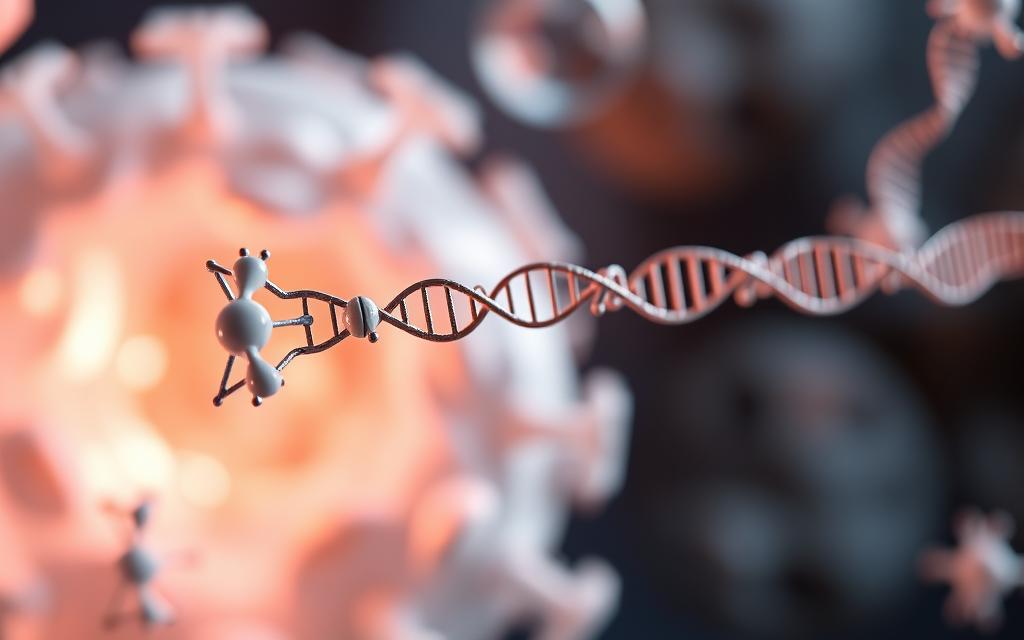
Antisense oligonucleotides (ASOs) can silence genes by binding to RNA. They do this by matching up with RNA sequences. This is done with great accuracy.
Once bound, ASOs can start several ways to stop gene activity. Some ASOs activate RNase H to break down the RNA. Others block ribosomes from making proteins.
This RNA targeting method lets scientists create treatments for specific genetic issues. It’s precise, so it doesn’t mess with other genes by mistake.
Modulating Splicing and Translation
Antisense tech can also tweak how RNA is processed. ASOs can change splicing to fix genetic problems. This can fix or improve protein function.
Changing splicing is a key way to treat genetic diseases. It helps fix errors in RNA processing. This leads to better proteins.
Another use is in controlling how much protein is made. Some ASOs can adjust this without destroying the RNA. This is useful for fine-tuning protein levels.
Antisense tech is great for RNA targeting because it can affect many parts of gene expression. It works from the start of gene activity to the end.
“ASOs can bind to their target RNA transcript in a sequence-specific manner via Watson-Crick base pairing. They can be designed to target specific sequences or genetic variants.”
This precise targeting is key to antisense therapy. It lets scientists tailor treatments for each person’s genes. This approach is getting more use in treating different genetic diseases.
Medical Applications of Antisense Technology
Antisense technology is changing many areas of medicine. It offers new ways to treat diseases that were once untreatable. These treatments work by targeting the genetic roots of diseases.
Therapeutic Areas and Disease Targets
Antisense technology is used in many medical fields. It helps with both rare and common diseases. This technology is precise, making treatments more effective for certain patients.
Oncology: Targeting Cancer Genes
In cancer treatment, antisense technology is a game-changer. It targets genes that help cancer grow. This can stop tumours from growing and surviving.
These treatments are very promising for cancers caused by specific genetic changes. They can be more effective than traditional chemotherapy. This is because they target cancer genes directly.
Neurological Disorders: Examples and Approaches
Antisense technology is also used for neurological diseases. It can help with conditions like spinal muscular atrophy and amyotrophic lateral sclerosis. It does this by changing how genes are used or by reducing harmful proteins.
Getting these treatments to the brain is a challenge. But, new types of ASOs have made it possible. This opens up new ways to treat brain diseases.
Drug Development and Clinical Utilisation
Turning antisense technology into medicines is a complex process. Scientists must make sure the treatments are effective, safe, and reach the right place in the body.
Testing these medicines in clinical trials is different. They need to be given for longer periods to work. This is because they work in a unique way.
Regulatory bodies have special rules for these medicines. They look at how safe and effective they are. They also consider how these medicines work differently.
Most approved antisense medicines treat rare diseases. But, there are many more in development for more common conditions. This shows how confident scientists are in this technology.
Key Antisense Drugs and Treatments
Antisense oligonucleotide therapeutics have changed medicine a lot. Many ASO drugs have been approved. These treatments are big steps forward in targeted therapy, giving hope to those with genetic conditions.
Fomivirsen for Cytomegalovirus Retinitis
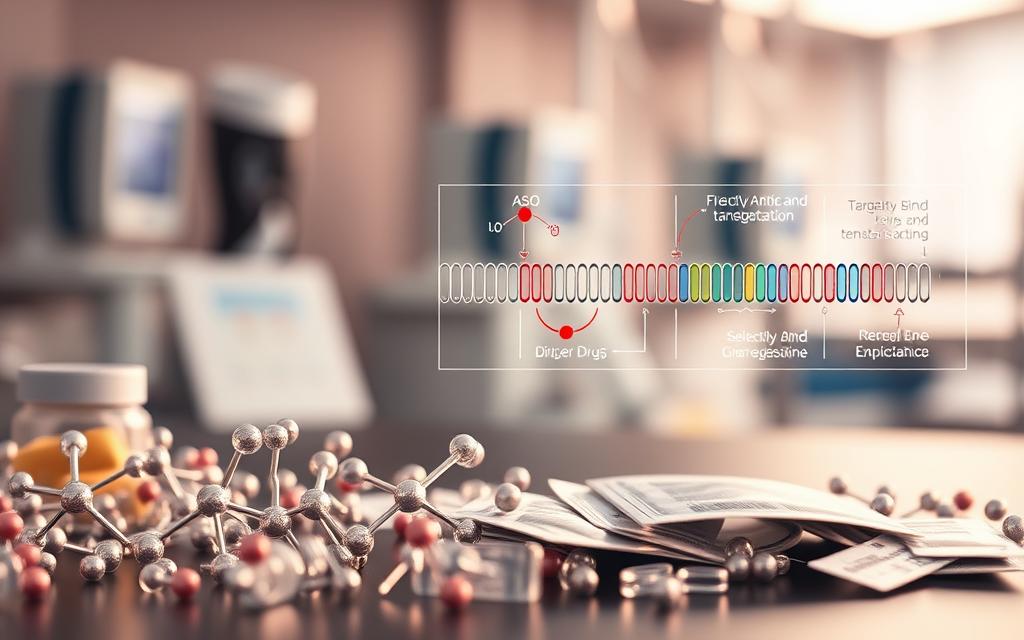
Fomivirsen was the first antisense drug approved by the FDA in 1998. It fights cytomegalovirus retinitis, a serious eye infection. This mainly affects people with AIDS.
The drug stops the virus by binding to messenger RNA. Studies showed it works well, proving antisense tech is a good treatment.
Nusinersen for Spinal Muscular Atrophy
Nusinersen is a big win for spinal muscular atrophy (SMA). It’s a phosphorothioate ASO drug that helps make more survival motor neuron protein.
Tests showed it helped SMA patients reach milestones they never thought possible. Nusinersen is now a major drug for SMA, helping many families.
Eteplirsen for Duchenne Muscular Dystrophy
Eteplirsen uses exon skipping to treat Duchenne muscular dystrophy. It helps make proteins from a faulty gene.
People taking eteplirsen got better and their disease didn’t get worse as fast. This drug is a big step forward for treating this serious muscle disease.
Other Approved and Experimental Therapies
More ASO drugs are being developed. Some have been approved for different conditions. Many others are in clinical trials.
Researchers are working to make these drugs better. They want to improve how well they work and how they’re delivered. The future looks bright for these treatments.
| Drug Name | Primary Indication | Mechanism of Action | Year Approved |
|---|---|---|---|
| Fomivirsen | Cytomegalovirus retinitis | Viral mRNA inhibition | 1998 |
| Nusinersen | Spinal muscular atrophy | SMN2 splicing modification | 2016 |
| Eteplirsen | Duchenne muscular dystrophy | Exon skipping | 2016 |
| Inotersen | Hereditary transthyretin amyloidosis | TTR protein reduction | 2018 |
| Volanesorsen | Familial chylomicronaemia syndrome | ApoC-III inhibition | 2019 |
The success of ASO drugs shows how powerful antisense tech is. More research is promising even better treatments for genetic diseases soon.
Delivery Mechanisms for Antisense Therapeutics
Without advanced delivery systems, even the best antisense drugs won’t work. They face many biological hurdles on their way to the target site inside cells. Overcoming these obstacles is key to successful gene regulation.
Challenges in Cellular Delivery
Antisense oligonucleotides meet several barriers before reaching their RNA targets. The first is cell membranes, which are hard for these large, charged molecules to cross. Even if they get inside, they often get stuck in endosomes, away from their target RNA.
Getting to the right tissues is another big challenge. ASOs given systemically might spread all over the body instead of focusing on specific organs. This can lower their effectiveness and increase side effects.
Stability is also a problem. Unmodified oligonucleotides break down quickly in blood and tissues. Early versions of ASOs had short lifespans, limiting their use in medicine.
Lipid Nanoparticles and Conjugation Strategies
New delivery methods have been developed to tackle these issues. Lipid nanoparticles protect ASOs from degradation and help them get into cells. These particles can be designed to target specific tissues and reduce clearance.
Conjugation strategies are another major breakthrough. Adding specific molecules to ASOs can greatly improve their performance. The move from early phosphorothioate oligodeoxynucleotides to modern conjugated ASOs shows this progress:
- Second-generation ASOs used 2ʹ-methoxyethyl modifications for better stability
- Generation 2.5 designs introduced 2ʹ-constrained ethyl modifications for stronger binding
- Modern conjugates like N-acetyl galactosamine target the liver
GalNAc conjugation is a big step forward. It uses asialoglycoprotein receptors on liver cells for excellent liver uptake. This means lower doses are needed compared to unmodified drugs.
These advancements are vital for treating genetic disorders. Better targeting and reduced systemic exposure make antisense drugs more effective. Further improvements in delivery technologies will open up new treatment options.
Now, researchers are working on delivering drugs to non-liver tissues. Overcoming the blood-brain barrier is a top priority for neurological disorders. Advances in conjugate chemistry and nanoparticle design are helping to meet these challenges.
Advantages of Antisense Technology in Medicine
Antisense technology is changing how we treat diseases. It offers benefits that traditional medicines can’t. This new way targets genes directly, opening doors to new treatments.

High Specificity and Targetability
Antisense oligonucleotides are very precise. They target specific RNA sequences. This is because they are designed to match exactly with target messenger RNA.
This precision means fewer side effects. Unlike regular drugs, ASOs are made to only affect certain genes. This reduces harm to other parts of the cell.
The way it works is clear. It targets genes in a specific way. This is great for diseases caused by specific genetic changes.
Potential for Treating Genetic Disorders
Antisense technology is a big hope for genetic diseases. It could help the 8,000 rare conditions that are hard to treat. These diseases often don’t get much attention from drug makers.
It’s perfect for personalised medicine. ASOs can be made for each patient’s unique genetic issues. This is a big step forward.
It can even change how we treat diseases like spinal muscular atrophy and Duchenne muscular dystrophy. This is a major breakthrough. It means we can tackle the disease at its source, not just its symptoms.
As research goes on, we learn more about how it works. It’s not just for rare diseases anymore. It’s also being explored for more common conditions where precise genetic treatment could make a big difference.
Limitations and Challenges
Antisense technology has great promise but faces many challenges. These issues are in science, medicine, and rules. They are big hurdles for researchers and companies to overcome.

Off-Target Effects and Toxicity
Antisense oligonucleotides might not always target the right RNA. This can cause problems in cells. It might lead to bad side effects and lower treatment success.
Some drugs might also cause the immune system to react too much. This can lead to inflammation.
Tofersen, a drug for ALS, shows these challenges. It was approved for reducing a biomarker linked to disease. But, it didn’t show clear benefits in a big trial. Yet, other studies suggest it can help patients stay stable.
Stability and Pharmacokinetic Issues
Antisense oligonucleotides can break down quickly in the body. This makes them less effective. They are attacked by enzymes that break down RNA.
Getting the right amount of drug to the right place is hard. It’s a balance between being effective and safe. Researchers must figure out the best dose, how well it gets to tissues, and how long it works.
These issues affect how well antisense drugs work in real life.
Regulatory and Manufacturing Hurdles
Getting antisense drugs approved is tough. They are treated like biological medicines, which have stricter rules. This makes the approval process longer and harder.
Making these drugs on a large scale is also a challenge. It needs advanced technology to keep quality high. This makes making these drugs expensive and time-consuming.
Regulators want lots of safety data before they say yes. This careful check is to protect patients. But, it makes getting these drugs to market harder and more expensive.
Recent Advances and Innovations
Antisense technology is growing fast, with new discoveries changing genetic medicine. These breakthroughs are changing how we treat diseases. They open doors to new treatments for conditions we couldn’t help before.
CRISPR and Antisense Synergies
CRISPR gene editing and antisense technology are being used together. This mix makes treatments more precise and lasting. It’s a big step forward in genetic medicine.
CRISPR changes DNA permanently, while antisense oligonucleotides control genes temporarily. Together, they offer a powerful tool for genetic disorders. This combo is great for diseases needing quick fixes and long-term solutions.
Studies show antisense molecules boost CRISPR’s effectiveness. They help with delivery and reduce mistakes. This teamwork is a big step in pharmaceutical development for genetic diseases.
Next-Generation Oligonucleotide Designs
Scientists are making new oligonucleotide designs. These designs are more stable, specific, and easier to deliver. They use new chemicals to improve how they work and reduce side effects.
New designs also help oligonucleotides get into cells better. They can now reach tissues that were hard to get to before. This makes them more useful for treating diseases.
According to recent research, new ways to use oligonucleotides are coming. These include better ways to change splicing, degrade mRNA, and stop translation.
- Enhanced splicing modulation capabilities
- Improved mRNA degradation techniques
- Novel translation inhibition methods
The table below shows how new oligonucleotide designs differ from old ones:
| Feature | Traditional Designs | Next-Generation Designs |
|---|---|---|
| Chemical Modifications | Basic phosphorothioate | Advanced bridged nucleic acids |
| Delivery Efficiency | Limited tissue penetration | Enhanced cellular uptake |
| Stability Profile | Moderate serum stability | High resistance to nucleases |
| Therapeutic Window | Narrow safety margin | Improved toxicity profile |
These new developments are starting a new chapter in pharmaceutical development. They make it possible to treat diseases we couldn’t before. The ongoing work in oligonucleotide design keeps antisense technology leading in genetic medicine.
Researchers are also looking into using different oligonucleotides together. This way, they can tackle diseases from different angles. It’s a step towards more effective treatments.
Future Directions in Antisense Technology
Antisense technology is growing fast, opening new ways in healthcare and treatments. Researchers and companies are finding new ways to treat diseases. This could change how we handle both rare and common illnesses.
Recent wins with ASO therapies have boosted the field. They’ve inspired hope for treatments for rare diseases.
Personalised Medicine and Genomics Integration
Antisense tech is leading the way in personalised medicine. It can target specific genetic changes. This makes treatments fit each patient’s genetic makeup.
Genomic sequencing and bioinformatics help find unique genetic changes. This lets researchers create highly specific antisense compounds. These compounds can tackle patient-specific mutations, not just general disease pathways.
Soon, antisense therapies might be made for single patients or small groups. This could treat conditions that were thought untreatable because of their genetic uniqueness.
Expanding Therapeutic Indications
Antisense medical treatments are not just for genetic disorders anymore. Researchers are looking at using it for many diseases. It could be used for common conditions, infectious diseases, and neurological disorders.
Some areas look promising for growth:
- Cardiovascular diseases where gene regulation could manage cholesterol levels
- Metabolic disorders requiring precise control of enzyme production
- Inflammatory conditions where targeted inhibition of specific proteins could reduce symptoms
- Oncological applications through regulation of cancer-related genes
The table below shows possible future uses and their current status:
| Therapeutic Area | Development Phase | Key Challenges | Potential Impact |
|---|---|---|---|
| Neurodegenerative Disorders | Early clinical trials | Blood-brain barrier delivery | High – addresses unmet needs |
| Common Cancers | Preclinical research | Target specificity in complex environments | Moderate to high – complementary to existing therapies |
| Autoimmune Diseases | Experimental models | Immune system modulation without suppression | High – targeted intervention |
| Viral Infections | Advanced development | Rapid mutation adaptation | Moderate – needs quick development |
These new medical treatments could help more people. They keep the precision that antisense tech is known for. It could soon help with many conditions, making personalised medicine more available.
Research is working to solve delivery and stability issues. New chemistries and delivery methods could help. This could make antisense tech work in harder-to-reach areas and diseases.
The future of antisense tech looks bright. It could change how we treat many diseases. As research goes on, we’ll see more advanced medical treatments using this powerful genetic approach.
Conclusion
Antisense technology has changed how we treat diseases. It started as an idea and now we have medicines that help patients. This shows how important it is in biotechnology.
Now, we have medicines like nusinersen and eteplirsen. They help people with spinal muscular atrophy and Duchenne muscular dystrophy. These medicines show how genetic medicine can help with diseases we couldn’t treat before.
But, there are challenges like getting the medicine to the right place in the body. Yet, the future looks bright. New ways to make and deliver these medicines will help more people.
Antisense technology is a big step forward in medicine. As we learn more, we’ll find new ways to use it. This will help us make treatments that are just right for each person.
FAQ
What is antisense technology and how does it work?
Antisense technology uses short, synthetic strands called antisense oligonucleotides (ASOs). These ASOs bind to specific RNA sequences. This binding can change how genes work, helping to treat diseases.
What are the main medical applications of antisense technology?
It’s used to treat many conditions. This includes genetic disorders, cancers, and viral infections. It’s a precise way to fix problems at the RNA level.
Which antisense drugs have received regulatory approval?
Fomivirsen, Nusinersen, and Eteplirsen are approved. They treat diseases like cytomegalovirus retinitis, spinal muscular atrophy, and Duchenne muscular dystrophy. They show the power of RNA targeting in medicine.
How are antisense oligonucleotides delivered to target cells?
They use lipid nanoparticles for protection and uptake. Conjugation methods like GalNAc target the liver. Research focuses on getting past cell barriers for better results.
What advantages does antisense technology offer over traditional drugs?
It’s very specific, reducing side effects. It’s great for genetic disorders and personalised medicine. ASOs can target specific mutations that small molecule drugs can’t.
What are the challenges associated with antisense therapeutics?
Challenges include off-target effects and toxicity. There are also issues with drug stability and how it’s absorbed. These need to be solved in drug development.
How is antisense technology evolving with recent innovations?
New advances include working with CRISPR for better results. There are also new oligonucleotide designs and delivery systems. These aim to treat more diseases and reduce side effects.
What is the future outlook for antisense technology?
It will be more integrated with personalised medicine. Treatments will be tailored to each person’s genes. It will also tackle common diseases and infections, promising to change how we treat illnesses.
