

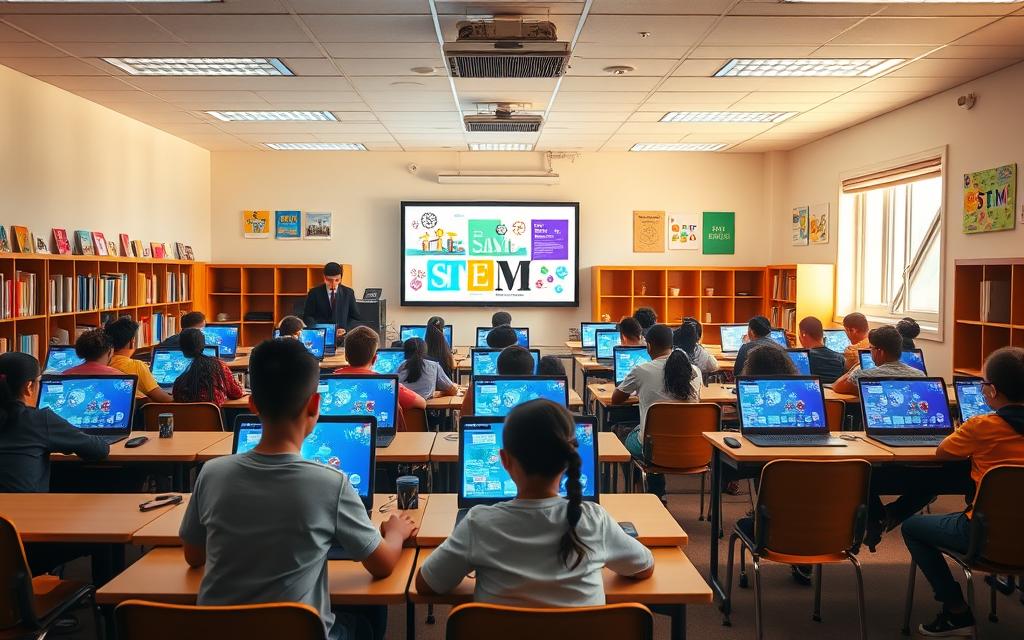
Education has changed a lot in recent years. Now, classrooms use digital learning tools to make learning exciting. This change is a big step forward in how we teach.
Today’s educational technology lets each student follow their own learning path. It meets their unique needs and how they learn best. This means learning is no longer the same for everyone.
Teachers use student engagement strategies on digital platforms to keep students interested. They use interactive content and tools that help students work together. This makes learning more fun and meaningful.
Technology helps students get ready for the future. It teaches them skills that go beyond just school knowledge. This way, students become well-rounded and ready for whatever comes next.
The Role of Technology in Modern Education
The digital revolution in education is more than new tools. It’s a complete change in how we teach and learn. Technology makes learning interactive, preparing students for our digital world.
Transforming Traditional Learning Environments
Old classrooms focused on teachers and textbooks. Now, technology has changed this, making classrooms flexible. Students can work together, research, and create.
With digital tools, real-time collaboration and global information are at their fingertips. This change helps different learning styles and paces. Students can learn in many ways, not just one.
Learning has moved from just listening to active knowledge construction. Students now interact with content, solve problems, and test ideas. This builds critical thinking and problem-solving skills.
Related Posts:
- How Technology Impacts the World Global Changes and…

- How Technology Changed the Entertainment Industry…

- What Does Digital Mean in Technology The Foundation…

- What Is DuraShock Technology Rugged Footwear Construction

- What Is Antisense Technology Gene Regulation and Medicine

- What Is Brain Chip Technology Neural Interfaces Explained
Digital platforms make learning active through simulations, games, and virtual labs. Students learn by doing, not just listening. This leads to better understanding and retention.
As one education expert notes:
“Technology turns students from audience members into participants, transforming education from a spectator sport into an engaging practice.”
Integration with Curriculum Standards
Using technology well means aligning it with learning goals. Just adding tech without a purpose can be a distraction. It’s important to map technology to specific curriculum goals.
This curriculum integration ensures technology supports learning. Teachers choose tools that help students meet required skills and concepts. Technology becomes a tool for achieving educational standards.
Aligning Tools with Educational Objectives
Systems like Google Classroom and Canvas are good examples of alignment. They help organise content and communications around curriculum frameworks. They offer structure while keeping things flexible.
Good alignment asks key questions: Does this tool help students learn required skills? Does it fit the curriculum’s scope and sequence? Does it give the right assessment data? When technology answers yes, it’s truly integrated.
The aim is curriculum integration that improves learning, not replaces it. Technology should support learning goals, not set them. This creates a mix of traditional excellence and digital innovation.
How Does Technology Support Student Learning
Educational technology changes how we teach by making learning environments more dynamic and personal. It meets the needs of all students. This part looks at how digital tools make learning more engaging and tailored for today’s classrooms.
Enhancing Student Engagement and Interaction
Digital platforms change how students interact with learning materials and each other. They use multimedia and teamwork features that old methods can’t offer.
Studies show interactive learning boosts motivation and keeps knowledge fresh. Students get more into their studies when they can play with content and get feedback right away.
Using Interactive Media and Gamification
Interactive media makes learning fun with videos, simulations, and virtual labs. It makes hard ideas easy to remember for all kinds of learners.
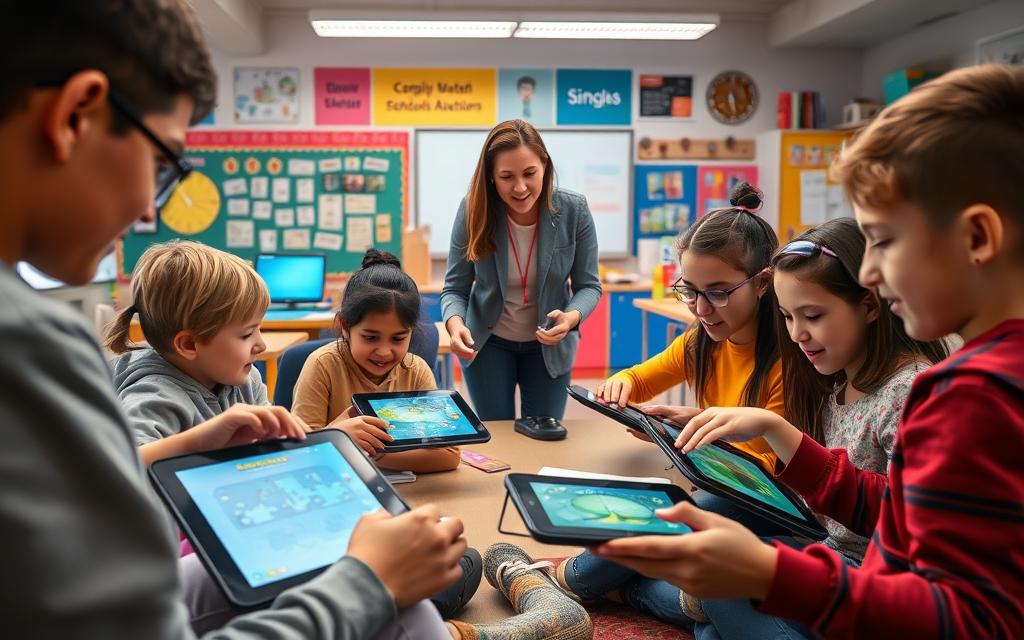
Gamification turns learning into games, making it fun. It uses points, badges, and leaderboards to make tasks exciting.
Educational games and simulations let students try things without fear. They can keep practicing until they get it right, building confidence and skill.
Enabling Personalised Learning Experiences
Technology helps teachers tailor learning to each student. It uses data to find out what each student is good at and what they need to work on.
Personalised learning lets students learn at their own speed. This means they master material before moving on. It helps those who struggle and keeps advanced students interested.
Adaptive Software Tailored to Individual Needs
Adaptive learning platforms adjust to how well a student is doing. They create learning paths that fit each student’s needs.
Smart software spots where students might be lost or have wrong ideas. It then offers special help and practice to fix these issues.
Personalised learning platforms let students choose how they learn. This helps everyone learn better, as they can pick what works best for them.
Key Digital Tools for Effective Learning
Modern education uses special digital platforms to make teaching easier and learning better. These tools are key to today’s learning spaces. They help deliver content and work together.
Learning Management Systems: Google Classroom and Canvas
Learning management systems are at the heart of digital classrooms. They organise learning materials and have strong admin tools.
Streamlining Assignment Distribution and Feedback
Google Classroom makes giving out and getting back assignments easy. Teachers can share tasks and resources, and students can send in their work online.
It also has tools for grading and giving feedback. Teachers can:
- Mark up documents directly
- Use rubrics for assessments
- Leave private comments
- Export grades
Canvas does similar things but with more options for customising. Its SpeedGrader tool helps teachers mark work quickly but keeps feedback high quality.
Both systems keep track of grades automatically. This helps teachers make better decisions based on student data.
Collaborative Platforms: Microsoft Teams and Slack
Collaborative tools like Microsoft Teams and Slack help students and teachers talk more easily. They make it easier to work together, even when they’re not in the same place.
Facilitating Group Projects and Communication
Microsoft Teams works well with Office 365, making it easy to be productive. It has:
- Channels for group talks
- File sharing and co-authoring
- Video calls for meetings
- Assignment tabs for grading
Slack is more flexible for team chats. It keeps conversations tidy and works with lots of educational apps.
Both platforms let students work together at their own pace. This is great for those with a lot on their plate.
Teachers use these tools to keep an eye on group work and help when needed. Seeing how students interact online helps teachers spot who might need extra help.
Using these tools well helps students learn to work together and communicate online. They learn important teamwork skills and how to use digital tools, all while keeping up with their studies.
Strategies for Implementing Technology in Classrooms
Using technology in classrooms needs careful planning. It’s about mixing digital tools with teaching methods that work well. This way, teachers can create exciting learning spaces that use technology to its best.
Blended Learning Techniques
Blended learning mixes classroom teaching with online materials. It’s flexible and keeps the face-to-face teaching important.
Combining Online Resources with In-Person Teaching
Good blended learning uses digital content well with classroom activities. Teachers might start with an online test, then teach in person based on the results.
This method offers learning at your own pace and quick access to extra materials. Students can review online content anytime and get help in class.
Flipped Classroom Models
The flipped classroom changes how we teach. Students watch videos at home, then learn by doing in class.
Utilising Pre-recorded Lessons for In-Class Activities
Teachers make or find videos for students to watch before class. Class time is for discussions, projects, and solving problems.
This method helps students understand better by doing. They come to class ready to think deeply with teacher help.
| Strategy | Key Components | Student Benefits | Implementation Tips |
|---|---|---|---|
| Blended Learning | Online modules, in-person instruction, digital assessments | Self-paced learning, immediate feedback | Start with one subject area, gradually expand |
| Flipped Classroom | Pre-recorded lessons, interactive activities, collaborative projects | Deeper engagement, practical application | Keep videos under 10 minutes, provide guided notes |
| Station Rotation | Learning stations, online activities, teacher-led instruction | Varied learning modes, personalised attention | Clear station instructions, timed rotations |
| Flex Model | Online content, small group instruction, independent practice | Customised learning paths, increased autonomy | Use learning management systems for tracking progress |
Using technology well in classrooms needs constant checking and changing. Teachers should always look at what works and make changes based on student feedback.
Both blended learning and flipped classrooms can really improve how students learn. When done right, these methods can change teaching and learning for the better.
Supporting Diverse Learners with Technology
Educational technology makes learning fair for everyone. It helps all students succeed, no matter their challenges or background. This makes classrooms welcoming places where everyone’s differences are valued.
Assistive Technologies: Read&Write and Dragon NaturallySpeaking
Assistive technology has changed how students with different needs learn. These tools offer support that meets each student’s needs, keeping learning challenging but fair. They help make learning personal and accessible.
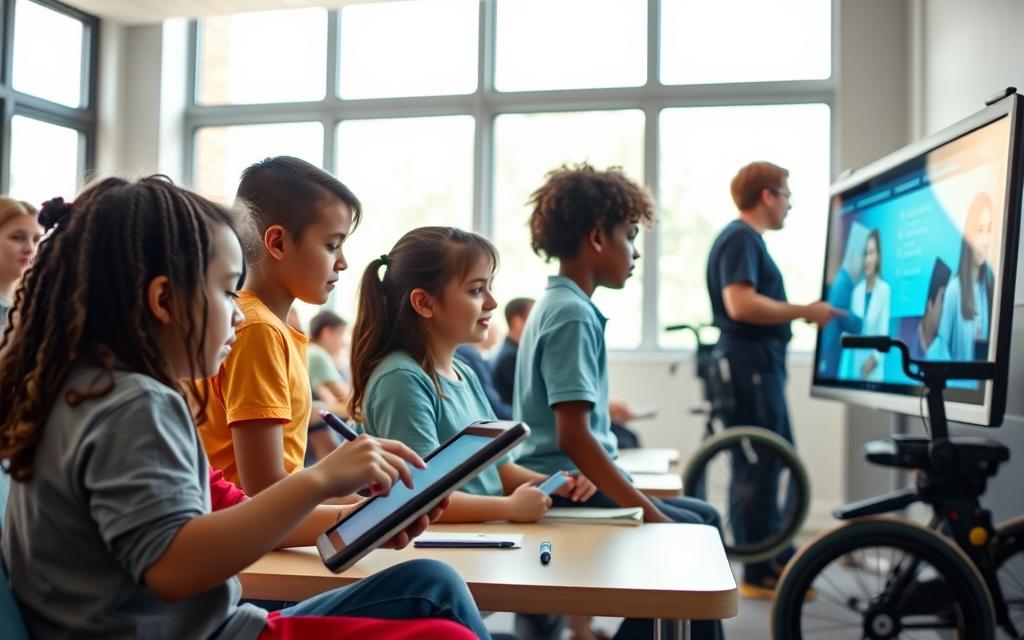
Read&Write helps with reading and writing through text-to-speech and word prediction. It’s great for students with dyslexia or visual impairments. It makes reading easier and helps students understand and remember better.
Dragon NaturallySpeaking lets students with physical or writing challenges use voice commands. They can write essays and control computers with their voice. It’s a big help for those with motor skill or processing issues.
Together, these technologies make education inclusive. Schools see students more confident and involved in learning. It shows that everyone can achieve, no matter their differences.
Resources for Multilingual Learners: Duolingo and Rosetta Stone
Language learning tools have made it fun and interactive. They help both English learners and those studying other languages. They offer feedback and cultural context that old methods can’t match.
Promoting Language Acquisition and Inclusion
Duolingo makes learning languages fun for all ages. Its lessons are short and rewarding. It adapts to each student’s pace and needs.
Rosetta Stone teaches languages through speech recognition. It helps students speak correctly from the start. The programme is structured and includes cultural lessons.
These tools help multilingual students fit in better. They also help native English speakers learn other languages. This promotes understanding and global awareness.
“When we provide the right technological tools, we’re not just accommodating differences—we’re celebrating and leveraging them for richer learning experiences.”
These tools show how technology can overcome language barriers. Schools see better grades and social skills in English learners. They help keep cultural identity while improving language skills.
Data Analytics and Assessment Tools
Modern education uses powerful tools to understand and support student learning. These tools give insights into how students are doing. This helps teachers give better instruction and make learning more personal.
Learning Analytics Platforms: PowerSchool and Illuminate Education
Learning analytics platforms have changed how schools track student progress. They collect and process data to find patterns and trends that might be missed.
Monitoring Progress and Identifying Learning Gaps
Platforms like PowerSchool and Illuminate Education have dashboards that show student achievement. Teachers can see where students need help and act quickly.
These systems let teachers watch student progress in real time. They can:
- Track how each student is doing against learning goals
- Find out where many students struggle
- Change teaching methods based on data
- Share student progress with students and parents
“Data-driven decision making has become the cornerstone of effective educational practice, transforming how we support student growth.”
Formative Assessment Tools: Quizlet and Edpuzzle
Formative assessment tools give immediate feedback on student understanding. They are different from traditional tests because they offer feedback right away.
Providing Immediate Feedback and Adaptive Quizzes
Tools like Quizlet and Edpuzzle make learning fun. They have quizzes that change based on how students do, making sure they’re challenged but not overwhelmed.
These platforms help with educational data analysis by:
- Providing instant feedback on student performance
- Creating learning paths based on how students do
- Helping teachers understand what students know
- Using different types of questions to test different skills
| Tool | Primary Function | Key Features | Best For |
|---|---|---|---|
| PowerSchool | Learning analytics | Comprehensive data dashboards, progress tracking | Institutional-level analysis |
| Illuminate Education | Educational data analysis | Standards alignment, intervention planning | Curriculum mapping |
| Quizlet | Formative assessment | Flashcards, adaptive learning games | Vocabulary and concept practice |
| Edpuzzle | Formative assessment | Video-based quizzes, progress monitoring | Multimedia learning assessment |
Using these tools together creates a strong system for supporting student learning. They give a complete view of student progress from different angles.
Educators can use learning analytics for big-picture trends and formative assessment for daily adjustments. This way, they understand students’ needs on both a big and small scale.
Encouraging Collaboration Through Technology
Today’s classrooms use collaborative technology to connect students across distances. These tools change how students team up, removing old classroom limits. They help students work together in many different learning places.
Digital Whiteboards: Jamboard and Miro
Enhancing Visual and Collaborative Learning
Digital whiteboards change how students see ideas and work on projects together. Google’s Jamboard is easy to use, letting many students add to projects from different devices at once.
Miro has more features for complex tasks. It has an endless canvas for mind maps, diagrams, and planning, with lots of templates.
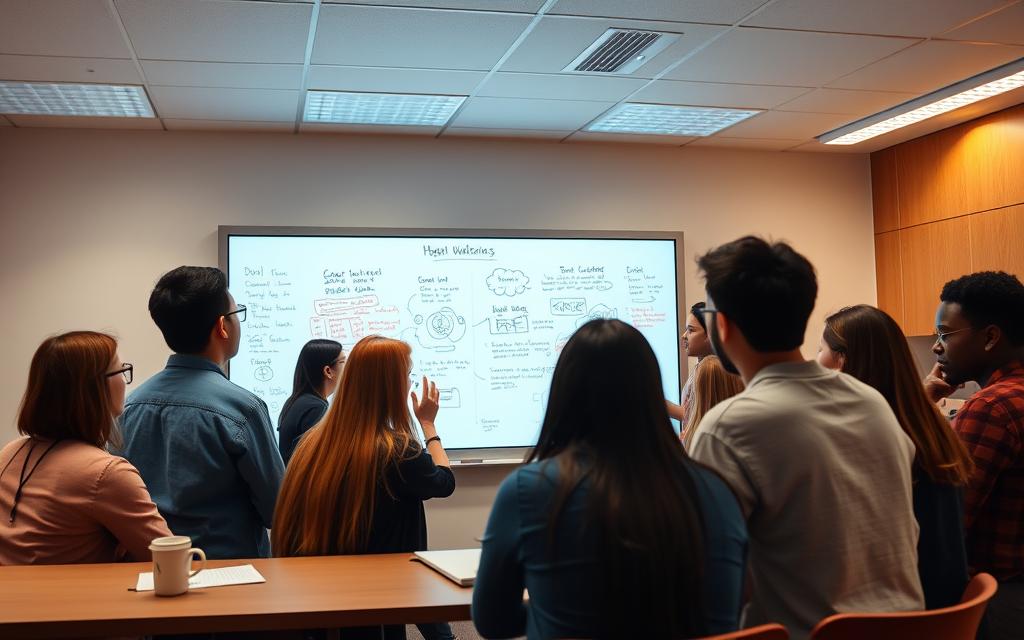
- Brainstorming where students share ideas live
- Group problem-solving with visual tools
- Peer review with comments and notes
- Interactive presentations that get everyone involved
These digital whiteboards help students who learn better with pictures than words.
Video Conferencing Tools: Zoom and Google Meet
Supporting Remote and Hybrid Learning Environments
Video conferencing tools are key for collaborative technology in schools. Zoom has features like breakout rooms, screen sharing, and recording.
Google Meet works well with Google Classroom, making it easy for schools using it. Both support video conferencing education with:
- Virtual classroom sessions
- Small group talks in breakout rooms
- Guest talks from experts far away
- Online parent-teacher meetings
These tools are great for different learning setups. They help keep education going, no matter where students are. They’re key for video conferencing education today.
To use these tools well, teachers need to set rules for online behaviour. They should plan structured collaboration time. Using features like hand-raising and chat helps manage group work.
Addressing Challenges in Technology Adoption
Using educational technology well means overcoming big hurdles like access and security. These problems can really hurt how well digital learning works. Schools need strong plans to make sure all students get to use new tech.
Ensuring Equitable Access to Digital Resources
Getting everyone online is a big challenge in schools today. Many students don’t have internet at home or the right devices. This gap is worst in rural areas and for those who can’t afford it.
Schools must do more than just give out devices. Students need reliable internet, help with tech, and skills to use it well. This is key for them to do well in digital learning.
Strategies for Bridging the Digital Divide
There are good ways to tackle these access issues. Schools can lend out devices to those who need them. Working with internet providers can make online access cheaper for poor families.
Community tech centres are also a great help. They offer internet and computer time after school. This is a big help for students without internet at home.
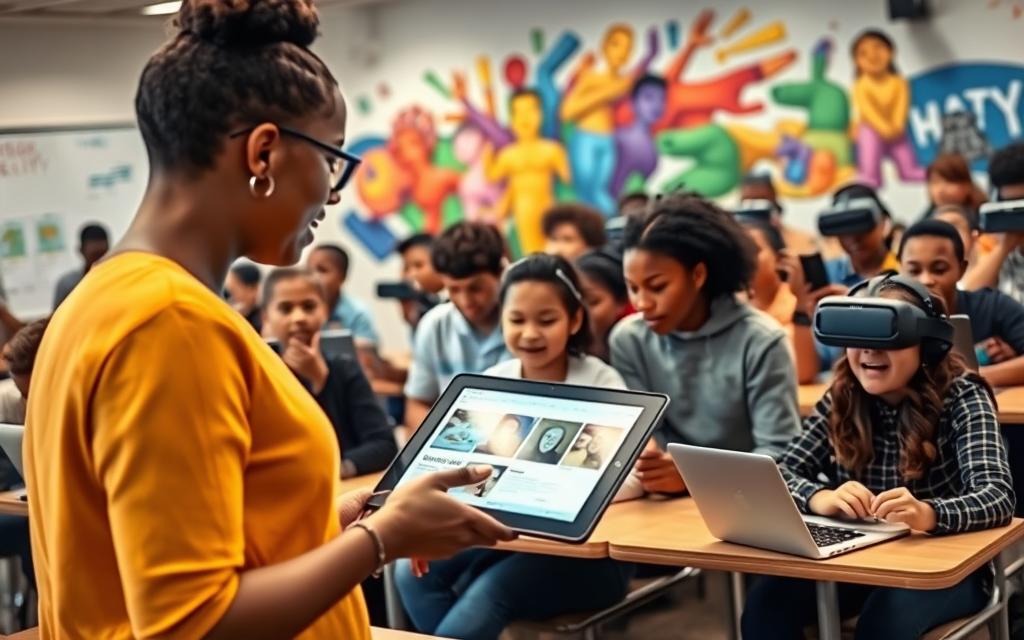
Teaching digital skills is another important step. Students and parents need to know how to use tech tools well. Schools should make learning these skills part of their regular lessons.
Maintaining Privacy and Security in EdTech
As more schools use digital tools, keeping data safe has become a big issue. Schools handle personal student info that needs strong protection. If this info gets leaked, it can harm both students and schools.
It’s vital for schools to focus on keeping EdTech safe. They need to protect against hackers and follow privacy laws.
Best Practices for Data Protection and Online Safety
Here are some important steps for keeping data safe in schools:
- Use strong encryption for all student data
- Check the security of all digital tools regularly
- Teach students about being safe online
- Have clear rules for keeping and deleting data
- Use extra steps to log in to systems
Schools should also have plans for when data gets leaked. These plans tell how to stop the leak and tell people who were affected. Training staff regularly helps them know their part in keeping things safe.
Teaching students about online safety is also key. Showing them how to be safe online helps stop problems before they start. This helps keep the tech safe too.
Innovative Technologies Shaping Future Learning
The world of education is changing fast, thanks to new technologies. These changes are making learning more exciting and effective. They open up new ways for students to learn and interact with knowledge.

Artificial Intelligence in Education: IBM Watson Education and Century Tech
Artificial intelligence is changing how we teach. It offers smart, flexible learning solutions. IBM Watson Education uses smart computers to help teachers tailor lessons for each student.
Century Tech is another leader in AI in education. It uses smart networks to find out what each student needs to learn. This way, every student gets the right challenge and help.
Personalised Learning Paths and Predictive Analytics
Predictive analytics help teachers know what students need before they struggle. AI looks at how students do and who might need extra help. This way, teachers can act fast and give the right support.
This approach makes learning paths that change as students progress. It keeps learning exciting and relevant to each student’s needs.
Virtual and Augmented Reality: Oculus Rift and Google Expeditions
Immersive tech is making learning more real. It lets students explore places they can’t visit in real life. With Oculus Rift, they can see historical sites and scientific wonders from their classroom.
Google Expeditions takes students on virtual field trips. These trips match what they’re learning in class. They make learning fun and interactive.
Creating Immersive Educational Experiences
Augmented reality adds digital info to the real world. It lets students play with 3D models and see abstract ideas come to life. This hands-on learning makes learning more fun and engaging.
These new tools are changing education for the better. They make learning more interactive and exciting. As they get better, they’ll keep shaping how we teach for years to come.
Best Practices for Educators and Institutions
Using educational technology well needs careful planning. Both teachers and schools must work together. They should make sure digital tools help learning, not hinder it.
Professional Development for Technology Integration
Starting with good technology use means training teachers well. This training should go beyond just learning how to use tools. It should show how to use them in teaching.
Training Programmes and Continuous Support
Good training includes both starting lessons and ongoing help. Teachers should get to try tools in a safe space. This lets them see how they work in class.
Pairing new teachers with tech experts is helpful. These experts can offer advice and help solve problems. Regular meetings help tackle any issues that come up.
Schools should create places where teachers can share ideas. This helps everyone improve and come up with new ideas. Many schools see that using technology in a planned way makes teaching better.
Evaluating and Selecting Effective Tools
The edtech market is growing fast. Schools need to pick tools that really help students learn. They should have clear rules for choosing tools.
Criteria for Choosing Appropriate Technologies
Choosing the right technology is more than just looking at what it can do. The table below shows important things to think about:
| Evaluation Criteria | Key Considerations | Priority Level |
|---|---|---|
| Pedagogical Alignment | Matches curriculum standards and learning objectives | High |
| Technical Requirements | Compatibility with existing infrastructure and devices | High |
| Data Privacy | Compliance with student data protection regulations | High |
| Cost Effectiveness | Total cost of ownership including training and updates | Medium |
| User Experience | Intuitive interface for both students and educators | Medium |
Testing tools in real classrooms is a good idea. This lets schools see how they work in practice. Feedback from teachers and students is very helpful.
It’s important to keep checking if tools are working well. Schools should have ways to update or replace tools as needed.
Conclusion
Technology in education has changed how students learn. Digital tools like Google Classroom and Microsoft Teams make learning fun and interactive. They help students of all kinds learn better together.
Technology also helps students learn in their own way. Tools like PowerSchool and Quizlet give teachers insights into how students are doing. This helps make learning more personal and effective.
The future of learning looks even more exciting. We’ll see more use of artificial intelligence and virtual reality. Tools like IBM Watson Education and Oculus Rift will make learning even more engaging.
But, using technology well takes careful planning. Teachers need to focus on how it helps students learn, not just the tech itself. They must also make sure everyone has access and keep data safe.
When used right, technology makes learning exciting and focused on students. It’s a big step towards better education. The future of teaching is full of new and exciting ways to learn.
FAQ
How does technology transform traditional learning environments?
Technology changes education from just listening to learning by doing. It makes learning fun and interactive. This way, students can work together and learn more effectively.
What are the benefits of personalised learning through technology?
Personalised learning makes students more interested and helps them remember what they learn. It also meets the needs of all learners, leading to better results.
Which digital tools are most effective for managing and enriching learning?
Tools like Google Classroom and Canvas make teaching easier. They help with organisation and sharing work. Microsoft Teams and Slack are great for teamwork and talking to each other.
How can educators implement blended learning and flipped classroom models?
Blended learning mixes online and traditional teaching. The flipped classroom uses videos to free up class time for hands-on activities. It needs careful planning and solving common problems.
How does technology support students with diverse learning needs?
Tools like Read&Write and Dragon NaturallySpeaking help with learning difficulties. Duolingo and Rosetta Stone support students who speak different languages, making learning fair for everyone.
What role do data analytics and assessment tools play in education?
Tools like PowerSchool and Illuminate Education track student progress. Quizlet and Edpuzzle give quick feedback and adjust learning to fit each student.
How can technology facilitate collaboration among students and educators?
Digital whiteboards like Jamboard and Miro make learning visual and fun. Video tools like Zoom and Google Meet help students and teachers work together, even from far away.
What are the main challenges in adopting educational technology?
Big challenges include making sure everyone has access and keeping data safe. It’s important to protect privacy and teach digital responsibility.
Which innovative technologies are shaping the future of education?
AI tools like IBM Watson Education and Century Tech offer learning plans tailored to each student. Virtual and augmented reality, like Oculus Rift and Google Expeditions, bring learning to life.
What are the best practices for integrating technology in education?
Good integration means teachers get training and support. It’s also important to choose tools that match learning goals and student needs.