



Our world is changing fast because of new technology. It’s changing how we live and work everywhere. These changes bring us great benefits but also big problems.
Technology has changed our lives in many ways. It has helped us find new medicines and grow food better. Because of it, many people are now richer and healthier.
But, there are also big challenges. The United Nations says technology can help us meet our goals. But it also threatens our privacy and fairness.
Digital technologies are spreading fast. They bring big changes that we need to think about carefully. It’s important to use these changes wisely.
As research shows, making new technologies available to everyone is key. It helps us move forward together.
The Evolution of Technology and Its Global Reach
Technology has come a long way from simple tools to complex digital networks. This change has greatly affected how we live and interact globally.
Digital technologies have grown faster than any other innovation in history. They have changed our world quickly. Now, we are all connected across different places, cultures, and economies.
Historical Milestones in Technological Advancement
For centuries, technology has evolved with each new discovery. These innovations have shaped our digital world today.
Related Posts:
- What Does Digital Mean in Technology The Foundation…

- How Technology Changed the Entertainment Industry…

- How Technology Supports Student Learning Tools and…
- What Is Brain Chip Technology Neural Interfaces Explained
- What Is DuraShock Technology Rugged Footwear Construction

- What Is Antisense Technology Gene Regulation and Medicine

Some key inventions include:
- The printing press (1440) – made knowledge more accessible
- The telegraph (1837) – allowed fast communication over long distances
- The personal computer (1970s) – made computing personal
- The World Wide Web (1989) – connected the world through information
These milestones have had big effects on many areas, like education and business. They show how technology keeps getting better over time.
“In today’s world, technology is key to our progress. It has changed how we live, work, and connect.”
The Rise of Digital Connectivity
The history of digital connectivity shows how networks have grown worldwide. Mobile phones and the internet have linked people and countries like never before.
In just two decades, digital tech has reached half of the developing world. This has changed how we talk, do business, and interact socially.
| Year | Global Internet Users | Mobile Subscriptions | Notable Development |
|---|---|---|---|
| 1995 | 16 million | 90 million | Commercial internet expansion |
| 2005 | 1 billion | 2 billion | Social media emergence |
| 2015 | 3.2 billion | 7 billion | Smartphone dominance |
| 2023 | 5.3 billion | 8.8 billion | 5G implementation |
Even with this progress, there are challenges. Some places adopt technology faster than others. This creates gaps in access to technology’s benefits.
The journey of technology is far from over. New technologies will keep building on what we have. This will keep expanding technology’s reach, bringing new chances and challenges to our world.
How Does Technology Impact the World Economically
Technology’s impact goes beyond just making things faster. It changes whole industries and how countries trade with each other. The digital world brings both chances and challenges for businesses, governments, and workers.

Automation and the Transformation of Labour Markets
Automation is changing jobs all over the world. McKinsey says about 800 million jobs could be lost by 2030. This is a big change in how we work.
But, new jobs will also be created. The move to green economies could add 24 million jobs by 2030. Robots and AI are making tasks faster and more efficient.
Workers need to learn new skills to keep up. Training programs are key to keeping the economy strong. People must adapt to stay relevant in a changing job market.
| Employment Impact | Projected Changes by 2030 | Key Industries Affected |
|---|---|---|
| Job Displacement | 800 million positions | Manufacturing, Administration |
| Job Creation | 24 million new roles | Renewable Energy, Technology |
| Skills Transformation | 60% workforce requiring retraining | Across All Sectors |
E-commerce and Global Trade Dynamics
Digital markets have broken down old trade barriers. Small businesses can now reach global customers easily. This change is a big deal for trade.
E-commerce has changed how we shop. We expect fast delivery and to find products anywhere. Old-fashioned stores must change or they’ll get left behind.
New tech in finance helps too. Digital payments and blockchain make transactions safer and quicker. These tools help more people join the global economy.
The world of e-commerce keeps getting better. Old limits don’t matter anymore. Companies that use new tech have a big edge in the global market.
Social and Cultural Transformations
Technology has changed how we interact and see the world. Digital platforms have changed social structures and cultural exchanges on a big scale.
Social Media’s Influence on Society
Social media connects nearly half the world’s population. It has created new ways to communicate and build communities. People can share their views and join causes they care about.
Groups that were once ignored now have a voice. Technology helps them share their stories and challenge old power structures.
But, social media also has its downsides. Algorithms can make biases worse instead of better.
Another big issue is the spread of false information. It can quickly cause trouble in communities.
Also, people might only see views that agree with theirs. This is because of how content is sorted online.
Cultural Globalisation Through Technology
Technology has made cultural exchange faster. Traditions, values, and creative works travel the world quickly.
This has made it easier to appreciate and adapt different cultures. People can enjoy international arts and foods without leaving home.
But, there’s a worry about losing local traditions. Some fear that big cultures might take over.
The table below shows how technology affects culture:
| Aspect | Positive Impacts | Challenges | Global Examples |
|---|---|---|---|
| Cultural Exchange | Cross-cultural understanding | Cultural appropriation concerns | K-pop’s global reach |
| Language Preservation | Digital archives of endangered languages | Dominance of major languages online | Indigenous language apps |
| Traditional Arts | Global audiences for local artisans | Commercialisation pressures | Online craft marketplaces |
| Cultural Education | Virtual museum tours worldwide | Digital access inequalities | UNESCO virtual heritage projects |
Technology can bring people together or highlight differences. It’s a double-edged sword.
The impact of technology on culture is changing. How we handle these changes will shape its future.
Environmental Effects of Technological Progress
Technology has a complex relationship with our planet. It offers solutions for protecting the environment but also creates new challenges. These challenges need our immediate attention.
Green Technologies and Sustainable Development
Today’s technology brings us closer to sustainable living. Renewable energy, like solar and wind power, is now affordable and clean. This change is a big step forward.
Precision farming is another innovation. It uses sensors and data to improve farming. This method boosts crop yields while protecting the environment.
Smart grids also play a key role. They manage energy distribution efficiently, cutting down on waste. This technology is vital for a greener future.
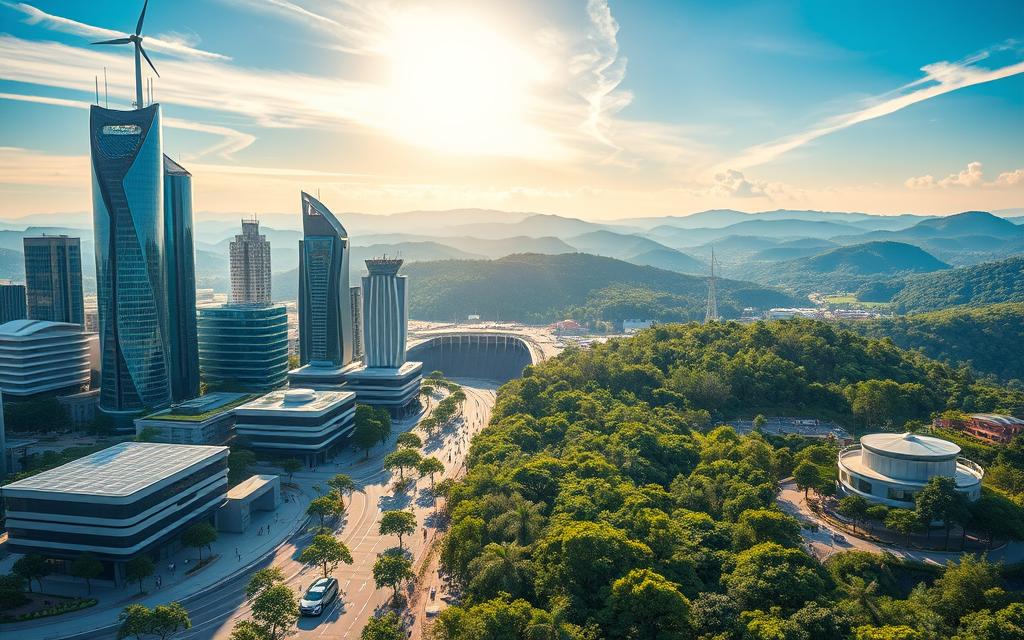
Electric cars and smart traffic systems reduce pollution in cities. Building management systems also help by saving energy. These efforts align with the United Nations’ Sustainable Development Goals.
E-waste and Ecological Challenges
Fast technological progress leads to a lot of e-waste. Old devices contain harmful materials that harm our environment. This is a serious issue.
Getting the materials for new tech also harms the planet. Mining for rare earth elements damages ecosystems and wastes water. The carbon footprint of making technology is huge.
Data centres and digital systems use more energy. While they become more efficient, their demand grows. This makes it harder to lessen their environmental impact.
| Environmental Aspect | Positive Technological Impact | Negative Technological Impact | Mitigation Strategies |
|---|---|---|---|
| Energy Production | Renewable energy systems | Manufacturing emissions | Clean production methods |
| Resource Management | Precision resource allocation | Rare earth element mining | Recycling programmes |
| Waste Management | Smart waste tracking | E-waste accumulation | Extended producer responsibility |
| Carbon Footprint | Energy efficiency gains | Data centre emissions | Renewable energy adoption |
Fixing e-waste problems needs a global effort. Many companies now take back old devices. Recycling technologies are getting better at reusing materials from e-waste.
The tech industry is moving towards a circular economy. Companies are making products that last longer and are easier to fix. This helps reduce the environmental harm of our digital world.
Advances in Healthcare and Wellbeing
Technology is changing healthcare fast. These healthcare technology advances are making diagnosis, treatment, and prevention better. They also boost wellbeing.
Telemedicine and Expanded Healthcare Access
Telemedicine has changed patient care by removing distance barriers. It lets people in rural areas see specialists without long trips. This is very helpful during health emergencies.
During the COVID-19 pandemic, virtual care was key. Patients got advice, prescriptions, and check-ups from home. This kept them safe and made care accessible.
Telemedicine tech keeps getting better. We now have better video calls, secure data, and linked health records. These updates make remote care more effective and easy to use.
Data-driven Medical Research
Modern medicine uses big data to find new things. Data-driven medical research uses AI to spot patterns in huge datasets. This speeds up finding new treatments and making medicines more personal.
AI has made doctors better at diagnosing diseases. It looks at images, genes, and patient records to find illnesses early and accurately. This is better than old ways.
The quick creation of mRNA vaccines for COVID-19 showed AI’s power. Researchers used advanced computing and data to quickly make vaccines.
| Technology Type | Healthcare Application | Impact Level |
|---|---|---|
| Telemedicine Platforms | Remote consultations | High |
| AI Diagnostics | Medical imaging analysis | Very High |
| Data Analytics | Drug development | High |
| Wearable Devices | Patient monitoring | Medium |
These healthcare technology advances are making life longer and treatments better. Technology in healthcare is a big medical breakthrough.
Changes in Education and Learning
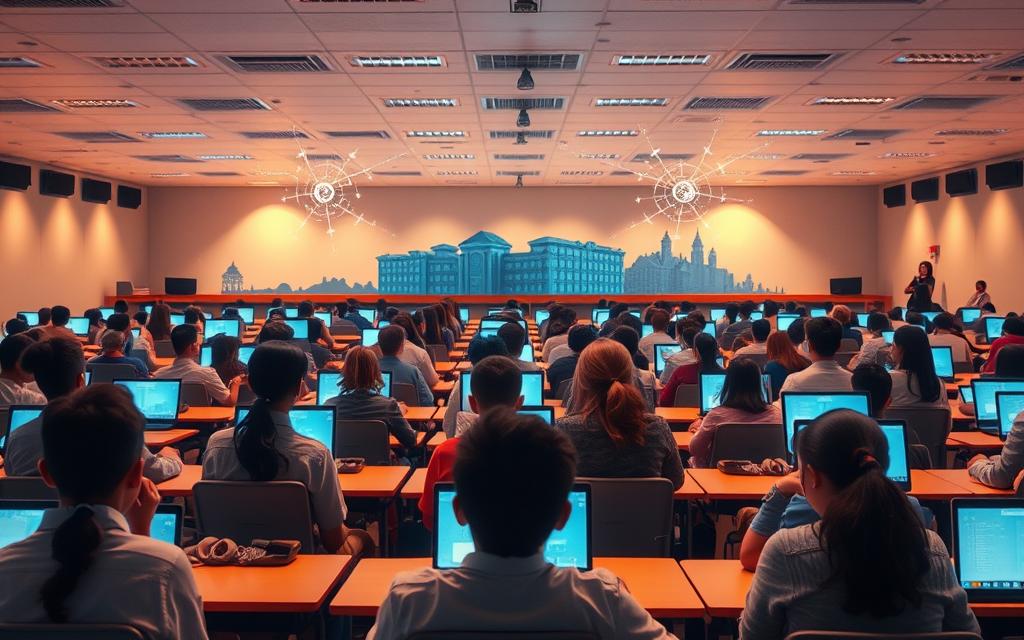
Technology has changed education a lot, opening new doors for learners everywhere. The old classroom model is evolving. Now, learning is more accessible, tailored, and effective thanks to digital tools.
Online Education Platforms and Their Impact
Digital learning platforms have made education available to all, no matter where you are or how much money you have. Students from far-off places or tough backgrounds can now get quality education they couldn’t before.
These platforms bring many benefits:
- Flexible schedules that fit different learning styles
- A wide range of courses from schools all over the world
- Interactive tools that make learning fun and stickier
- A cheaper way to learn than traditional schools
Artificial intelligence has made online learning even better. It creates learning systems that adjust to each student’s needs. This makes learning with technology more effective than ever.
Virtual and distance learning have opened doors for students who were once left out.
Immersive tech like virtual and augmented reality is making learning exciting. Students can visit historical sites, do science experiments online, or practice complex tasks in safe, virtual spaces.
Addressing the Digital Skills Gap
Even with all these advances, a big digital skills gap remains. This gap in tech access and skills could leave some people behind in our digital world.
There are ways to close this gap:
- Initiatives to make internet affordable in poor areas
- Programmes to teach digital skills to everyone
- Partnerships between public and private sectors for tech access
- Changes in school curricula to focus on digital skills
Schools are now seeing the need to tackle tech inequality. Purdue University’s study shows we need to build tech infrastructure and teach digital skills together.
The digital skills gap is a big challenge but also a chance. By investing in tech education for all, we can make sure everyone benefits from technology, not just the few who are already ahead.
It’s very important to have programmes that help people get the digital skills they need for work. Employers want people with digital skills in all fields. To fix this, we need everyone to work together: governments, schools, and businesses.
Political and Governance Innovations
Technology is changing how governments work and how people interact with politics. These changes offer great chances and big challenges for governance around the world.
Now, digital platforms make public services clearer and faster. Blockchain technology is very promising for keeping records safe and making governments more accountable.
Digital Tools for Democratic Engagement
Modern democracies use digital tools to get people involved. Online platforms let people share their views, get government services, and keep up with policy changes.
E-governance systems make things run smoother and cut down on corruption. Governments use digital portals for tasks like tax filing and licence applications. This makes services easier to access and more efficient.
Blockchain technology brings new levels of transparency to government. It allows for secure, verifiable records. This builds trust and stops tampering with official documents.
Cybersecurity Threats to Nations
As governments go digital, they face more complex cyber threats. State attacks, data breaches, and infrastructure hacks are big security risks.
The United Nations has warned about “digital divides” causing tension between nations. Some call this a “digital Berlin Wall” due to different internet governance and security approaches.
Using better encryption, biometric security, and AI to detect threats is key. These tools help protect sensitive info and critical infrastructure from harm.
Working together on cyber threats is vital. Nations must create shared security standards and response plans. This protects the global digital world while respecting each country’s sovereignty.
Ethical Considerations in Technology
Technology is growing fast, bringing up big ethical questions. We need to think carefully and find solutions. It’s about finding a balance between new ideas and respecting people’s rights.

Privacy and Data Security Concerns
Today, tech collects lots of personal info, causing big worries about data privacy. The push for new tech and protecting personal info is a big challenge in technology ethics.
Things like surveillance and data mining can show too much about us. Many don’t know how their info is used.
Balancing Privacy and Innovation: Technologies like AI and big data rely on vast amounts of personal information, creating tension between technological advancement and individual rights.
To keep data safe, we need strong security, clear policies, and real consent. Companies must protect info while allowing for new tech.
Bias and Fairness in Artificial Intelligence
AI is making big decisions in many areas, like jobs and health. But, it can also make things worse if it’s not fair.
The problem with AI bias fairness often starts with the data. Old data can have biases that AI learns and uses. This can unfairly treat some groups.
To fix this, we need teams with different views to spot biases early. This way, tech can help everyone more fairly.
| Privacy Framework | Key Features | Implementation Challenges | Effectiveness Rating |
|---|---|---|---|
| GDPR (EU) | Right to be forgotten, data portability | Global compliance complexity | High |
| CCPA (California) | Consumer opt-out rights | Patchwork state regulations | Medium |
| APEC Privacy Framework | Cross-border data principles | Voluntary adoption | Medium |
| Industry Self-Regulation | Flexible implementation | Inconsistent enforcement | Low |
Creating ethical tech needs constant watchfulness, teamwork, and flexible rules. By focusing on people’s dignity and fairness, we can use tech for good.
Global Inequality and the Digital Divide
Technology has the power to change the world, but it’s not shared equally. This digital divide stops many from joining the digital economy. It’s a big problem for those who are left behind.
Technology Access in Developing Regions
In many places, getting online and using digital tools is hard. It’s because of poor infrastructure, high costs, and not enough people knowing how to use technology. This keeps communities from joining the global progress.
Recent studies show a big gap in internet use. Women are 12% less likely to use the internet than men worldwide. This gap is even bigger in the poorest countries, which is a step back for everyone.

Older people and those with disabilities also face big challenges. Without special help and training, they might miss out on online services.
Economic Disparities Exacerbated by Tech
When not everyone has access to technology, it makes economic gaps bigger. Those without the internet miss out on chances in education, jobs, and business. They can’t keep up with those who are online.
Rich countries get more tech investment and innovation. This makes them even stronger while poor areas struggle to get basic internet.
This imbalance affects many areas like healthcare, education, and finance. These services need the internet, making it harder for those without to catch up.
To fix these issues, we need to work together. We should:
- Make internet affordable in remote areas
- Start digital literacy programs for local needs
- Make technology accessible for everyone
- Work with both public and private sectors to improve infrastructure
International groups say we must focus on helping the most vulnerable. If we don’t act, the digital divide could make social and economic gaps even wider.
Emerging Technologies and Future Trends
The world of technology is changing fast, bringing new ideas that could change everything. These new trends offer great chances but also big challenges for our society.
Technologies like artificial intelligence and blockchain are changing what we can do. They need careful thought about who gets to use them and how they’re fair. We must work together globally to make sure everyone benefits.
Artificial Intelligence and Its Prospective Impacts
Artificial intelligence is leading the way in new tech, with uses in almost every field. AI can look through huge amounts of data, find patterns, and predict things with great accuracy.
In healthcare, AI helps find diseases early and tailor treatments. It makes manufacturing better by predicting when things will break and improving quality. The finance world uses AI to spot fraud and understand risks.
But AI also raises big questions about fairness. If AI is biased, it can make things worse for some people. Also, if just a few companies control AI, it could be hard to govern.
As one report says:
“Data-powered technology has the power to help people, improve health, and protect rights.”
To make AI better, we need to make sure it’s fair and open. Working together worldwide is key to setting rules that help everyone and avoid problems.
Blockchain and Decentralised Innovations
Blockchain changes how we trust and check transactions. It’s a system that keeps records safely without needing a single boss.
Blockchain is not just for digital money. It’s changing how we manage goods, check identities, and vote. It makes things more open and less prone to cheating.
But blockchain has its own problems, like being slow and using a lot of energy. It also needs more people to understand and use it to really make a difference.
As seen:
“New tech is often too expensive for most people. Making it cheaper is key to progress.”
Getting AI and blockchain to work together will need global effort. Countries around the world must be involved to make sure these techs solve problems, not create new ones.
Regulatory Challenges on a Global Scale
Technology is growing fast, and countries face big challenges. These challenges go beyond old borders. The digital world doesn’t have borders, making it hard to figure out who’s in charge.
Cross-border Data Regulation and Privacy Laws
Data moves quickly around the world, making privacy hard to protect. The European Union’s GDPR has set a high standard. This has inspired other countries to follow.
Now, governments and companies can use data in many ways. This raises big questions about our rights and their duties online.
Key challenges in cross-border data regulation include:
- Conflicting legal requirements between jurisdictions
- Enforcement mechanisms across international borders
- Protection of citizen data regardless of storage location
- Balancing security needs with privacy rights
Experts are talking about how to manage data globally. They say we need rules that support innovation and protect rights.
Balancing Innovation with Regulatory Oversight
The push for new tech meets the need for safety. Good global tech regulation must keep us safe without stopping progress.
New tech needs rules to be used wisely. AI, for example, needs careful rules to avoid risks and help us.
Successful ways to balance innovation and rules include:
- Flexible regulatory sandboxes for testing new technologies
- Multi-stakeholder involvement in policy development
- Proportional regulations based on actual risk assessments
- International standards that enable global cooperation
We need to keep talking about tech and rules. This way, rules stay up to date with our fast-changing digital world.
The future of data privacy laws and tech rules will need more global work. As tech gets better, rules must too. They must protect us all in this new world.
Conclusion
Technology has a huge impact on our world. This article looked at its effects on the economy, society, and environment. It shows how technology moves us forward but also brings big challenges.
We all need to think carefully about our choices. Making sure everyone has access and using technology wisely is key. The future of tech depends on solving these global problems.
This summary shows the good and bad sides of technology. Working together globally can unlock its benefits. But we must tackle issues like privacy and fairness to grow together.
What we do now shapes the future of technology. We must innovate but also be fair. Our journey to a balanced digital world goes on.
FAQ
How does technology contribute to achieving the UN’s Sustainable Development Goals?
Technology is key in helping reach the Sustainable Development Goals. It helps in areas like renewable energy, healthcare, education, and making economies more inclusive. For instance, digital tools help people get healthcare and education remotely. Green technologies also help protect our environment.
But, we must also think about the risks. These include privacy issues and making sure everyone has equal access to technology.
What are the economic impacts of automation on global employment?
Automation affects jobs in two ways. It might replace up to 800 million jobs, but it also creates new ones. For example, there could be 24 million jobs in green tech by 2030.
This change means we need to help people learn new skills. It shows how important sectors like fintech are for making economies more inclusive.
How does technology influence social interactions and cultural exchange?
Technology, like social media, connects people worldwide. It lets us share ideas and traditions easily. But, it also has downsides.
It can spread false information and create groups that only talk to themselves. This can make societies more divided and hurt public discussions.
What are the environmental benefits and drawbacks of technological advancements?
Technology has good sides like helping the environment. It brings in new energy systems and smart ways to farm. These help us be more sustainable.
But, it also has bad sides. It can lead to more waste and use up resources. We need to use technology in a way that’s good for the planet.
In what ways has technology revolutionised healthcare?
Technology has changed healthcare a lot. It makes healthcare more accessible with telemedicine. It also helps doctors find the right treatments with AI.
It even helps in finding cures faster with data analysis. For example, AI helped save lives during the COVID-19 pandemic. mRNA vaccines were developed quickly thanks to technology.
How is technology changing education and learning methodologies?
Technology is making learning better. It offers online classes and AI that learns with you. It also uses virtual and augmented reality to make learning fun.
But, it also shows we need to teach people about technology. We need to make sure everyone can use the internet and learn about digital skills.
What role does technology play in modern governance and political engagement?
Technology helps people get involved in politics more. It makes governments more open with tools like blockchain. It also makes things run smoother with e-governance.
But, it also brings risks. There are threats to data security and cyber attacks. We need strong security and international cooperation to keep our democracy safe.
What are the key ethical issues associated with technological development?
There are big ethical questions with technology. Privacy is a big one, with lots of data being collected. There are also biases in AI that can make things unfair.
We need to make sure technology is fair and protects our rights. This means having rules, diverse teams, and thinking about ethics in tech.
How does technology exacerbate global inequality?
Technology can make inequality worse. It creates a digital divide where some people don’t have access to technology. This makes economic gaps bigger and makes it harder to connect with others.
We need to make sure everyone can use technology. This is key to reducing inequality and making progress in connecting the world.
What future technologies hold significant impact for societal impact?
New technologies like AI and blockchain are very promising. AI can change many areas, from jobs to healthcare. Blockchain can make finance more open and secure.
But, we need to make these technologies affordable and work together globally. This will help us use them for the good of society.
What regulatory challenges does global technology present?
Global technology brings big challenges for rules. We need laws for data protection and rules for AI and cybersecurity. It’s important to balance new ideas with safety and fairness.
This requires talking and working together across borders. We need to make sure everyone agrees on how to use technology responsibly.
