


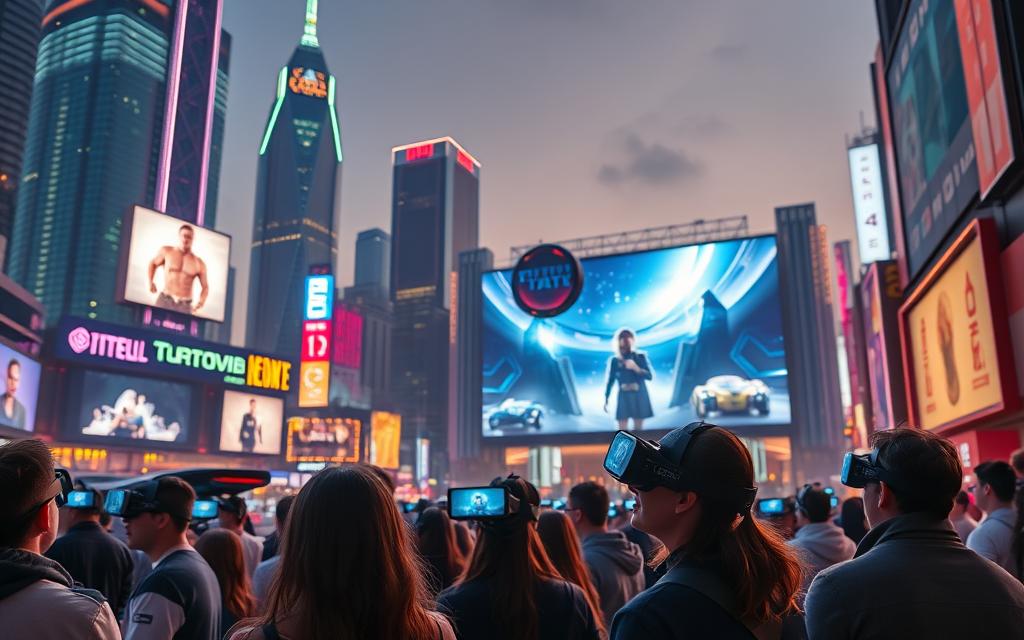
The move from silent films to today’s streaming is a remarkable digital transformation in media. Each step has changed how we make and watch content.
First, films got sound and colour. Then, TV brought entertainment to homes worldwide. Home video gave us control over what we watch.
Digital production and CGI changed how we tell stories. The internet led to streaming, changing how we watch. Now, streaming services are key, with mobiles and social media making it easier to access.
This ongoing technology evolution shows how historical innovations keep changing our entertainment.
The Birth of Cinematic Technology: Silent Film Era Innovations
The silent film era was a time of great change in technology. It set the stage for today’s movies. New devices and techniques were created, changing entertainment forever.
Early Motion Picture Technologies
Thomas Edison’s Kinetoscope was a big step in movie history. It let people watch short films alone through a small window.
The Kinetoscope and early projection systems
The Lumière brothers then came up with the Cinématographe. It showed movies on screens for more people. This was a big change from watching alone to watching together.
Celluloid film development and standardisation
35mm celluloid film became the standard for movies. It made it easier for filmmakers to share their work everywhere.
Pioneering Film Techniques
Filmmakers started trying new ways to tell stories. These early methods are now part of the film industry.
Related Posts:
- What Does Digital Mean in Technology The Foundation…

- How Technology Impacts the World Global Changes and…

- How Technology Supports Student Learning Tools and…
- What Is Citizen Eco-Drive Technology Solar-Powered Watches

- What Is DuraShock Technology Rugged Footwear Construction

- What Is Brain Chip Technology Neural Interfaces Explained
Early editing and special effects
Georges Méliès was a pioneer in editing and special effects. He used double exposure and hand-painted colour to make films magical.
The establishment of narrative cinema
D.W. Griffith and others worked on making stories flow. They used continuity editing to make movies tell stories well.
These innovations made cinema an art and entertainment. The history of silent films continues to inspire today’s filmmakers.
The Sound Revolution: Transforming Cinema Audiences
The silent era of cinema ended with a major change. Synchronised sound brought a new way of making and watching films. It added a sound dimension that amazed people all over the world.
The Introduction of Synchronised Sound
Warner Bros.’ Vitaphone system was a big step in film audio technology. It used discs that matched the film projector’s speed. This innovation hit its peak with 1927’s The Jazz Singer, which had the first dialogue and music.
The Vitaphone system and The Jazz Singer
Al Jolson’s line “You ain’t heard nothing yet!” marked the start of talkies. The Vitaphone system used 16-inch discs at 33⅓ rpm, linked to projectors for perfect sync.
Technical challenges in sound recording
Early sound recording had many problems. Microphones couldn’t pick up far-off sounds, so actors had to be close. Camera noise needed special enclosures, limiting movement. Getting sound and picture to match was hard.
Impact on Film Production and Exhibition
The sound in cinema change affected everything in filmmaking. Studios bought new gear, and filmmakers changed their ways to include sound.
Changes in acting and directing styles
Actors started acting more naturally, away from silent film gestures. Directors had to work with fixed microphones, leading to more static shots. The focus on clear dialogue made scripts and voice acting more important.
Theatre acoustics and sound system upgrades
Theaters had to be rebuilt for the new sound technology. Owners put in advanced speaker systems and sound treatments. This made the movie experience better and worth the higher prices.
| Aspect | Silent Era | Sound Era | Impact |
|---|---|---|---|
| Dialogue Delivery | Title cards | Spoken dialogue | More natural performances |
| Musical Accompaniment | Live orchestra | Synchronised soundtrack | Standardised musical experience |
| Theatre Equipment | Projector only | Sound system installation | Higher exhibition costs |
| Production Costs | Moderate | Significantly higher | Industry consolidation |
The synchronised sound history was a key moment in cinema. It changed how stories were told on screen. This technology saved the film industry during hard times and made sound a key part of movies.
Colour Technology: Enhancing Visual Storytelling
The change in cinema’s colour is a big step forward in storytelling. It moved from black and white to full colour, changing how stories are told on screen.
Early Colour Processes
Before full colour, filmmakers tried different ways to add colour. These early steps were key to the colour revolution that followed.
Hand-colouring and two-colour systems
In the early days, technicians coloured each frame by hand. This method was slow but added subtle colour effects.
The 1920s saw the start of two-colour systems like Technicolor’s No. II. These used red and green filters but couldn’t capture blue, leading to unnatural colours.
Technicolor’s three-strip process
Technicolor’s three-strip process in 1932 was a game-changer. It used three strips of film to capture red, green, and blue, allowing full colour.
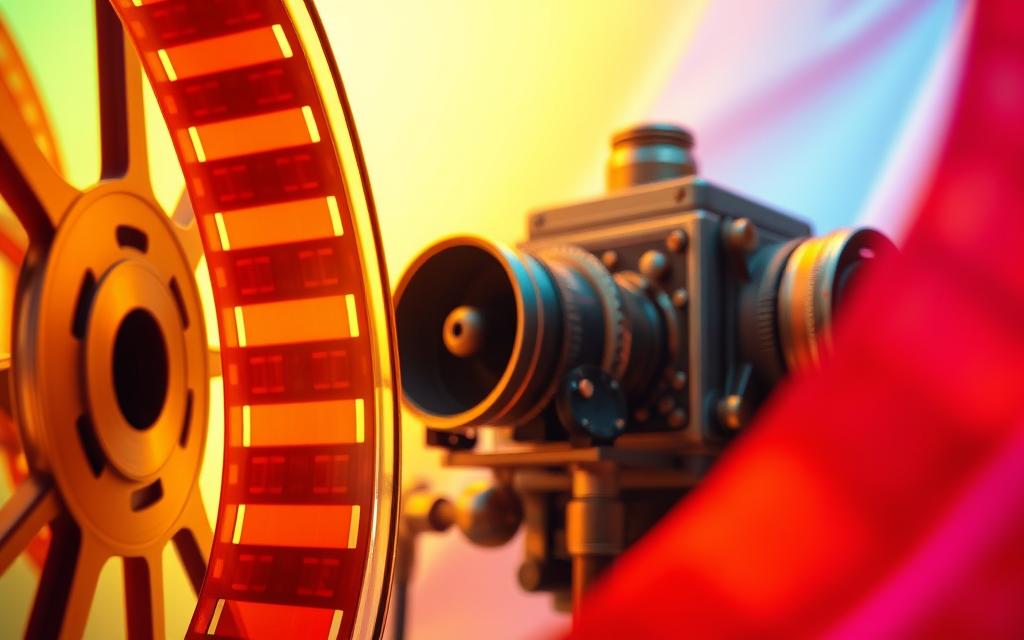
This technology brought vibrant colours to films. Classics like The Wizard of Oz and Gone with the Wind showed the power of colour in storytelling.
The Widescreen Revolution
As colour improved, filmmakers wanted to make movies even more engaging. The widescreen revolution of the 1950s offered epic scale and immersion.
Cinemascope and other formats
Cinemascope was introduced in 1953 with The Robe. It used anamorphic lenses to fit wide images on standard film, creating a wider frame.
Other formats like VistaVision and Todd-AO soon followed. They all aimed to make movies more immersive.
Impact on cinematography and set design
The wider frames changed how films were shot. Cinematographers learned to balance scenes across the wider frame.
Set designers also had to adapt. They built larger sets to fill the wider frames. This changed how actors were placed on screen.
| Technology | Introduced | Aspect Ratio | Key Innovation |
|---|---|---|---|
| Technicolor 3-strip | 1932 | 1.37:1 | Full spectrum colour reproduction |
| Cinemascope | 1953 | 2.55:1 | Anamorphic lens compression |
| VistaVision | 1954 | 1.85:1 | Horizontal film transport |
| Todd-AO | 1955 | 2.20:1 | 65mm film format |
These changes in colour and widescreen cinema changed movies. They created experiences that are powerful today.
Television’s Disruptive Influence on Entertainment
In the mid-20th century, television changed entertainment forever. It shifted how we consume and interact with media. This change was huge, making a lasting impact on how we watch and enjoy content.
The Rise of Broadcast Television
Television started with cathode ray tubes and broadcast systems like NTSC in America. These tools allowed for mass broadcasting of visual content into homes. This created a new way to enjoy entertainment.
Early television technology and standards
First TVs used mechanical scanning, then moved to electronic models. The National Television System Committee set the 525-line resolution standard for American TV.
- Not letting them show their films
- Stopping actors from being on TV
- Keeping their technical knowledge from TV makers
But, Hollywood soon saw TV’s value. They started making shows just for TV. This was a big change in broadcast TV history.
Changing Audience Habits
Television made entertainment more convenient. Families started watching TV at home instead of going to the cinema. This changed how we enjoy media for good.
The decline of cinema attendance
As TV became more common, fewer people went to the cinema. Between 1946 and 1956, cinema visits fell from 90 million to 46 million Americans. This was a big shift in entertainment.
New forms of home entertainment
Television brought new types of shows. Variety shows, serials, and live broadcasts became big hits. They brought people together in a way that was new and exciting.
This move from theatre to home entertainment made TV a big part of our lives. It changed where and how we watch things. It also changed how we plan our free time around TV shows.
The Home Video Revolution: VHS and Beyond
The 1980s saw a big change in how people watched movies. Home video technology brought cinema into living rooms. This changed how people watched films and created new ways for the entertainment industry to make money.
VHS versus Betamax Format War
The fight between VHS and Betamax was a famous tech battle. Betamax had better picture quality, but VHS won because it was more practical for people.
Technical specifications and market competition
JVC’s VHS system focused on recording time, not just quality. It could record up to four hours, more than Betamax’s one hour. This was a big win for people watching TV or movies.
Market competition grew as JVC let many companies use VHS technology. This made VHS tapes cheaper and more available. Sony, on the other hand, kept Betamax production limited, keeping prices high.

People chose VHS for its longer recording time. It was perfect for recording TV shows. VHS was also cheaper, making it more accessible to families.
Rental stores mainly sold VHS tapes because people wanted them. This made Betamax less popular, even though it was technically better.
| Feature | VHS | Betamax |
|---|---|---|
| Maximum Recording Time | 4-6 hours | 1-3 hours |
| Tape Cost (1985) | $15-20 | $25-30 |
| Player Price (1985) | $300-400 | $400-500 |
| Manufacturers | JVC, Panasonic, RCA | Sony only |
| Market Share (1988) | 85% | 15% |
Impact on Film Distribution
The home video revolution changed how movies made money. Studios found that video rights could bring in a lot of money after movies left theaters.
The rental market emergence
Video rental stores became big in America. Blockbuster Video grew everywhere, making Friday night rentals a weekly event for families.
This helped studios through deals and tape sales. It made sure they kept making money from old movies.
Secondary revenue streams for studios
Studios also made money by selling movies directly to consumers. They released popular films at lower prices for people to buy.
This worked well for kids’ movies and classics. Families bought their favorite movies, creating personal collections.
These changes doubled studio money from secondary markets in just five years. It let studios take more risks and keep old movies profitable.
The Digital Revolution: Computer-Based Production
In the late 20th century, computers started to replace old film techniques. This change made both making and getting films easier and opened up new creative ways. It also made making films faster and more efficient.
Non-Linear Editing Systems
Before, editing films was hard because you had to cut and join celluloid by hand. This took a lot of time and made it hard to try new things. Then, non-linear editing systems came along. They digitised footage, making it easier to edit on computers.
Avid Media Composer and Digital Workflow
Avid Media Composer became the top choice for digital film production. It brought a new way of working, where you could look at any part of the film instantly. No more rewinding tapes or searching through film cans.
This system used bins and a timeline to organise and edit. It let editors play with different versions of scenes easily.
Increased Editing Efficiency and Creativity
Non-linear editing made editing much more flexible. You could undo changes and change scenes around without worry. This let editors try new and bold ideas.
It also made it easier to add complex effects and transitions. This helped tell stories in new and exciting ways.
Digital Cinematography
While editing went digital, making films was mostly done the old way until digital cameras got good enough. Switching to digital cinematography was a big change for the industry.
Early Digital Cameras and Resolution Challenges
First digital cameras, like the Sony HDW-F900, didn’t match film’s quality. They had trouble with colours and exposure. This made people doubt digital’s place in high-end films.
Many filmmakers stuck with film because of its natural look and reliability.
The Transition from Film to Digital Acquisition
But, as camera tech and image processing got better, digital caught up. Soon, big films started using digital cameras for their benefits.
| Aspect | Film Acquisition | Digital Acquisition |
|---|---|---|
| Cost per hour | £400-£600 | £50-£150 |
| Immediate review | Not possible | Instant playback |
| Storage medium | Physical film cans | Memory cards/drives |
| Workflow integration | Requires digitising | Direct to editing |
The table shows why the industry moved to digital cinematography. Lower costs and being able to see footage right away were big wins for producers.
Now, digital film production is the norm, with film being the exception. This change has changed how we make and watch movies all over the world.
Computer-Generated Imagery: Transforming Visual Effects
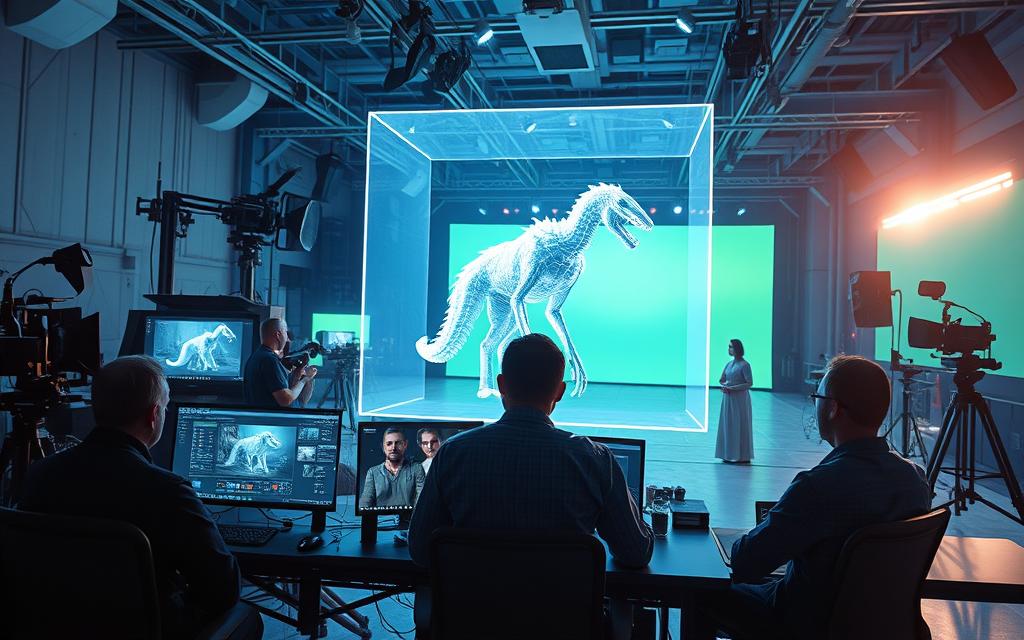
The growth of computer-generated imagery (CGI) has changed cinema a lot. It has moved from simple images to detailed, real-looking scenes. CGI in film has changed how we see stories on screen.
Early CGI Breakthroughs
It all started with small, experimental projects. These early efforts set the stage for today’s filmmaking.
Tron and early computer animation
Disney’s Tron in 1982 was a big step forward. It used computer animation to create a unique look. Even though it looks simple now, it showed what digital effects could do.
Jurassic Park and photorealistic effects
Jurassic Park in 1993 changed the game with its realistic dinosaurs. It showed that CGI could make things look so real, we forget they’re not there.
“The impact of Jurassic Park on visual effects cannot be overstated—it demonstrated that CGI could carry emotional weight and narrative importance.”
Modern CGI Capabilities
Today, visual effects evolution has reached new heights. Filmmakers can now create worlds that feel real and immersive. CGI has become a key part of telling stories.
Motion capture technology
Motion capture technology has changed how we animate characters. It lets actors’ movements be turned into CGI characters. James Cameron’s Avatar (2009) showed how this can make alien characters feel alive.
Virtual production and real-time rendering
The latest tech uses LED volumes and real-time rendering, seen in The Mandalorian. It lets filmmakers see final effects as they shoot. This makes filming more interactive and realistic.
This visual effects evolution has opened up new ways to tell stories. Films can now show ideas that were once just in our minds. The tech keeps getting better, with VFX facilities always pushing what’s possible.
Now, even smaller budgets can use advanced digital characters. The use of artificial intelligence and machine learning will make CGI even better and more realistic.
The Internet Era: Changing Content Distribution
The early 2000s saw broadband internet become widespread. This changed how entertainment reached people all over the world. It opened up new ways to share content but also posed big challenges for old media companies.
With fast internet, people could access media instantly, no longer needing physical copies. This marked the start of a new era in internet content distribution. It changed the entertainment world forever.
Early Online Content Platforms
Before streaming took over, new platforms tried to share digital content. RealPlayer and Windows Media Player were among the first to stream videos. But, they were limited by slow internet speeds.
These early tries showed the promise of online media, even with its flaws. They set the stage for better ways to share content later on.
YouTube’s Disruptive Influence
YouTube launched in 2005 and changed everything. Its YouTube impact was huge, letting anyone share videos worldwide.
It brought new competition to traditional media. Amateur creators could now reach global audiences. This changed how content was made and shared.

YouTube introduced new types of entertainment. From viral videos to tutorials, it showed that anyone could be a creator.
People started to value realness over perfect production. This made traditional media rethink how they made and shared content.
Digital Rights Management
Creators developed digital rights management to protect their work online. These systems tried to control how content was shared and accessed.
DRM grew from simple encryption to complex licensing. It became key for managing digital content and protecting creators’ rights.
Copyright Challenges in Digital Distribution
Digital copying made copyright issues complex. Old copyright laws struggled to keep up with the fast pace of digital sharing.
New systems for identifying content and removing it quickly were created. They tried to balance protecting rights with fair use in the digital world.
Piracy and Industry Responses
Digital piracy threatened traditional ways of making money. File-sharing and torrent sites spread copyrighted material widely.
The industry fought back with lawsuits and new streaming services. These services offered legal ways to watch content, making piracy less appealing.
These efforts slowly changed how people accessed content. The ongoing development of digital rights management continues to shape content sharing in the internet age.
How has technology changed the entertainment industry through streaming
The streaming revolution has changed entertainment in a big way. It’s not just about watching shows and movies online. It’s about how content gets to us and how businesses work.

Streaming Platform Infrastructure
Today’s streaming services use advanced tech to deliver content smoothly. The streaming services impact on how we watch starts with these systems.
Content delivery networks and buffering technology
Content Delivery Networks (CDNs) are key to streaming. They spread content around the world. This means less waiting for videos to load.
Smart buffering tech guesses what we want to watch next. It loads it before we ask. This makes watching feel instant, even with big files.
Algorithmic recommendation systems
These systems learn what we like and suggest more. They use complex algorithms that get better with each use.
“Recommendation algorithms have become the digital curators of modern entertainment, shaping viewing patterns through data-driven insights.”
The Netflix technology behind their suggestions is a big part of their success. It’s said to be behind 80% of what people watch on Netflix.
Business Model Transformation
Streaming has changed how entertainment is made and sold. It’s moved from old ways to new ones.
Subscription versus advertising revenue
Most streaming services use a subscription model. This means:
- Regular money from viewers
- No ads to watch
- Watching multiple shows at once
There are also services with ads for those who want to save money. This way, more people can enjoy streaming.
Original content production strategies
Streaming services now make a lot of their own shows. They spend billions on new content. This is a big change from how things used to be.
| Streaming Service | Annual Content Budget | Original Content Strategy |
|---|---|---|
| Netflix | $17 billion | Global original productions across genres |
| Disney+ | $8-10 billion | Franchise extensions and family content |
| Amazon Prime Video | $7 billion | High-profile acquisitions and originals |
These investments are based on what people watch. Services look at data to decide what to make next.
The streaming services impact has opened up entertainment for everyone. It lets new voices and genres reach audiences without old rules.
Mobile Entertainment: Content On The Go
The way we enjoy entertainment has changed a lot with mobile devices. Now, we can watch and listen anywhere, anytime. This change makes entertainment more personal than ever.
Smartphone Technology Advances
Today’s smartphones are more than phones. They are entertainment centers thanks to new tech. This tech makes streaming on phones a great experience.
Screen technology and resolution improvements
New screens like OLED and AMOLED have changed how we watch videos on phones. They offer better pictures and colors. This makes watching videos on phones as good as watching on big screens.
Mobile data speeds and streaming capabilities
Fast internet on phones has changed how we watch videos. Now, we can stream:
- HD and 4K videos without lag
- Live shows without interruption
- Big files quickly
App-Based Entertainment
Apps have brought new types of entertainment. They offer more than just watching videos. This is the future of entertainment.
TikTok and short-form video platforms
TikTok has changed how we make and watch videos. Its short, vertical videos are tailored just for you. This has made other apps change how they work too.
Mobile gaming and interactive content
Mobile games are now as good as console games. They have:
- Augmented reality
- Features for connecting with others
- Work on different devices
Young people love watching videos and playing games on their phones. This has made entertainment shorter and more interactive. It’s changing how we make and share entertainment.
Social Media’s Role in Entertainment Distribution
Social platforms have changed how we get entertainment. They’ve moved it from old ways to new digital spaces. This change has opened up new ways for finding content and for creators to connect with fans.
Viral Marketing and Content Discovery
Social media algorithms help promote content. They look at how people interact to show trending stuff. This means content that gets lots of engagement is more likely to be seen.
Social media algorithms and content promotion
Platforms like TikTok and Instagram use smart algorithms. They track what users like and share. This helps find and share content that people want to see.
This way, content can reach lots of people without big marketing budgets. It’s all about being creative and relevant, not just about how it looks.
Now, entertainment companies work with social media influencers. These partnerships help reach more people. Influencers have followers who trust their recommendations.
Good influencer strategies are about being real. Creators keep their unique style while sharing new things with their fans.
Direct-to-Consumer Engagement
Social media has cut out middlemen between creators and fans. This has changed how entertainment is made, promoted, and enjoyed.
Artist-fan relationship transformation
Stars now talk directly to their fans on platforms like Twitter and Instagram. This makes their connection more personal than before.
Fans feel closer to artists when they see their updates. This support often means more fans for new work.
Real-time feedback and content adjustment
Creators can see how their work is doing right away. They get feedback from social media. This lets them change their plans quickly.
Shows might add fan ideas, and musicians might change their sets based on what fans want. This keeps entertainment fresh and relevant.
Social media has made entertainment more interactive and dynamic. This change is always evolving, changing how we find and enjoy entertainment.
Conclusion: The Future of Entertainment Technology
Entertainment has changed a lot, from silent films to today’s streaming services. Each new technology has changed how we make and watch content. The future looks even more exciting with new innovations coming.
VR AR entertainment is the next big thing. It lets us dive into virtual and augmented reality worlds. This opens up new ways for gaming, live events, and interactive stories.
The streaming world is evolving with AI and more global content. Services like Netflix and Disney+ use smart algorithms to suggest shows. They also share stories from around the world with more people.
But there are challenges like too many subscriptions and too much content. Despite this, the industry is moving towards more interactive and accessible entertainment. Technology will keep changing how we enjoy stories and share cultural moments.
FAQ
What were the key technological innovations during the silent film era?
The silent film era saw big changes. Thomas Edison’s Kinetoscope let people watch films alone. The Lumière brothers’ Cinématographe made it possible to project films.
Standardising celluloid film was another key step. New techniques like cutting and splicing changed cinema. These innovations made cinema a unique art form.
How did synchronised sound transform cinema?
Synchronised sound changed cinema a lot. It was introduced with systems like Vitaphone. Films like The Jazz Singer showed its power.
It made films more real. Acting and directing changed. Theaters had to upgrade for sound, making films more popular.
What impact did colour and widescreen technologies have on film?
Colour and widescreen formats changed films a lot. Technicolor’s three-strip system brought full colour. Widescreen formats like Cinemascope made films bigger.
These changes made films more exciting. They influenced how films were made and looked, making them more immersive.
How did television disrupt the entertainment industry?
Television changed entertainment big time. It brought broadcast technology to homes. This made people watch films at home instead of in cinemas.
It led to fewer people going to cinemas. Hollywood started making TV shows. New ways to make money through TV ads and programming came up.
What was the significance of the home video revolution?
The home video revolution was huge. It started a war between VHS and Betamax. This let people watch films whenever they wanted.
It created new ways to watch films. Studios made more money. It changed how we watch films at home.
How did digital technology change film production?
Digital technology changed film making a lot. It brought non-linear editing and digital cameras. This made making films cheaper and faster.
It opened up new creative ways. The film industry moved from using film to digital.
What role has CGI played in modern filmmaking?
CGI has changed films a lot. It was first used in Tron and Jurassic Park. Now, it’s used in Avatar and The Mandalorian.
It lets filmmakers create amazing visuals. It’s changed how we see films, making them more real.
How has the internet altered content distribution?
The internet changed how we get films. Sites like YouTube let anyone share videos. It’s made it easier to find and watch films.
But, it also made it harder to protect films. It’s changed how we watch films, making them more accessible.
What makes streaming platforms like Netflix transformative?
Streaming platforms like Netflix are big changes. They use the internet to send films to your device. They offer films on demand.
They changed how films are made and sold. They’ve made films more global and accessible.
How has mobile technology influenced entertainment consumption?
Mobile technology has changed how we watch films. Smartphones and apps like TikTok make it easy to watch films anywhere. It’s changed how we watch films, making it more personal.
It’s made films shorter and more interactive. It’s changed how we watch films, making it more fun.
What is social media’s role in entertainment today?
Social media has changed how we find out about films. It uses algorithms and influencers to promote films. It lets people talk directly to filmmakers.
It’s made finding and talking about films more interactive. It’s changed how we discover and share films.
What are the future trends in entertainment technology?
The future of films looks exciting. We’ll see more virtual and augmented reality. AI will make films more personal.
Despite challenges, technology will keep making films more fun and accessible. It will make films more diverse and immersive.
