


Modern railways are looking for ways to be more efficient and kinder to the environment. Regenerative braking technology is a promising solution. It captures energy when trains slow down and turns it into electricity.
Trains no longer waste energy as heat. Instead, they can use it again. This is a big step forward for railway energy recovery.
The electricity saved can power other trains or go back to the grid. This is good news for operators and the community. It cuts down on costs and pollution.
We’re going to look into how this technology works and its uses. We’ll dive into how energy is converted and stored. This will show how it can change rail travel for the better.
The Fundamentals of Regenerative Braking Systems
Modern trains can save a lot of energy that old systems waste. Regenerative braking turns this lost energy into electricity. This is a big step forward for trains.
How Traditional Friction Braking Wastes Energy
Old braking systems use friction to slow trains down. This turns kinetic energy into heat that goes away. It’s a big waste of energy that could be used again.
Dynamic braking in electric trains also wastes energy. It uses resistor grids to turn motion into heat. This method slows trains down but doesn’t use the energy well.
The Physics Behind Kinetic Energy Recovery
Kinetic energy recovery works on Newton’s laws and energy saving. When a train brakes, it has a lot of energy that can be used instead of lost.
Related Posts:
- What Is Cold Wash Technology Cleaning Clothes Efficiently

- What Is Citizen Eco-Drive Technology Solar-Powered Watches

- How Technology Impacts the World Global Changes and…

- What Is DuraShock Technology Rugged Footwear Construction

- How Technology Changed the Entertainment Industry…

- What Is Antisense Technology Gene Regulation and Medicine

Energy Conversion Principles in Electric Motors
Electric motors use electromagnetic induction. They move trains forward by using electricity. But they can also make electricity when the train brakes.
This means the same motor can push the train and catch energy when it slows down. The motor’s rotor keeps spinning, making electricity through induction.
Mechanical to Electrical Energy Transformation
The energy change starts when the train’s motion turns the motor’s shaft. This motion in magnetic fields makes electricity in the motor windings.
This electricity can go back into the grid or be saved for later. How well this works depends on the motor, control systems, and the grid.
Regenerative systems can catch 70-80% of the energy that old braking methods waste. This is a big improvement over traditional methods.
Does the Technology Exist to Create an Energy Storing Train
Modern railways around the world show that storing energy in trains is possible and already done. The tech has grown up, with different places using it in different ways. This proves it works well.
Current State of Implementation in Global Rail Systems
Regenerative braking is a known tech in railways. European countries vary in how much of their trains use it. But, most of them do, showing it’s widely accepted.
This shows how energy-saving systems have become common in trains. Big rail networks everywhere now use some form of energy-saving tech. This shows it’s widely accepted and works well.
Technical Feasibility and Existing Solutions
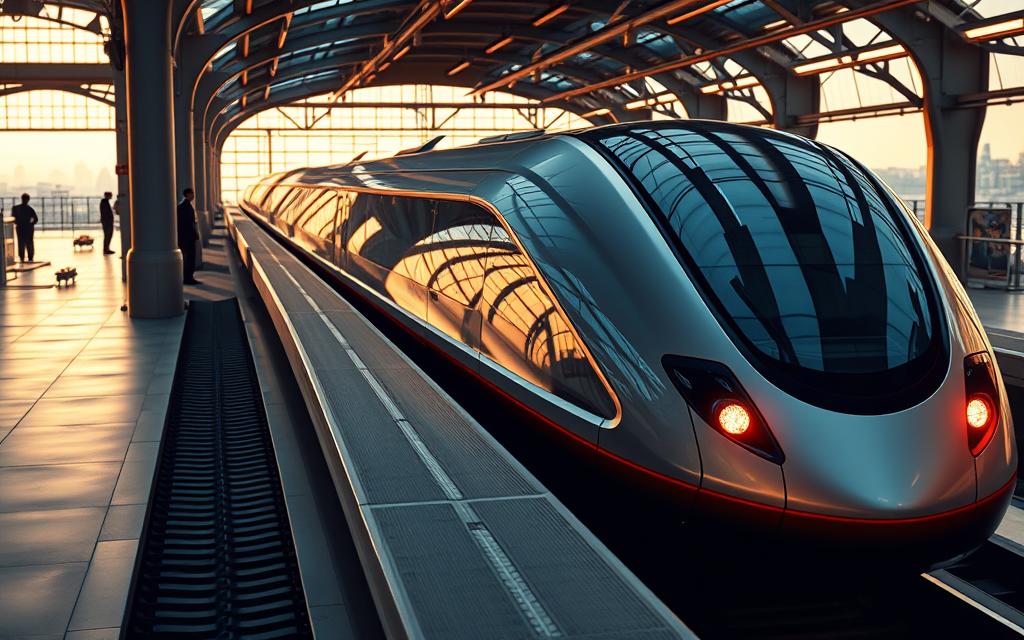
Trains that store energy are now a reality. Many working examples show they are reliable and efficient.
Siemens Desiro ML Rail Systems
Siemens’ Desiro ML trains use smart energy recovery. They capture energy when braking. This energy can be used later or sent back to the grid.
The Desiro ML’s advanced power control cuts down energy use. It keeps the train running well.
Alstom Coradia iLint Hydrogen Trains
Alstom’s Coradia iLint uses regenerative braking and hydrogen fuel cells. It’s a top example of green train tech.
The iLint stores braking energy, adding to its hydrogen power. This shows how advanced train tech can be.
Historical Development of Railway Regenerative Braking
The story of railway regenerative braking started with bold experiments long before we worried about the environment. This technology grew from a dream to a key part of managing energy.
Early Twentieth Century Experiments
In the late 19th century, Frank J. Sprague’s company made big steps. His 1886 constant-speed motor laid the groundwork for early attempts at regeneration.
These early systems showed they could work, but making them practical was tough. Railways saw the promise but faced big technical hurdles.
Post-War Technological Advancements
After the war, big leaps in technological advancements happened. Better power electronics and control systems made energy conversion more efficient.
In the 1960s-70s, European and Japanese railways took the lead. They turned theoretical ideas into working systems across many networks.
Modern Digital Control Systems
Now, we use advanced digital control systems for better energy recovery. These systems use microprocessors to manage braking across trains.
Today’s systems are a result of over a century of work. They can recover energy in ways early pioneers couldn’t imagine, making regenerative braking essential.
Key Components and System Architecture
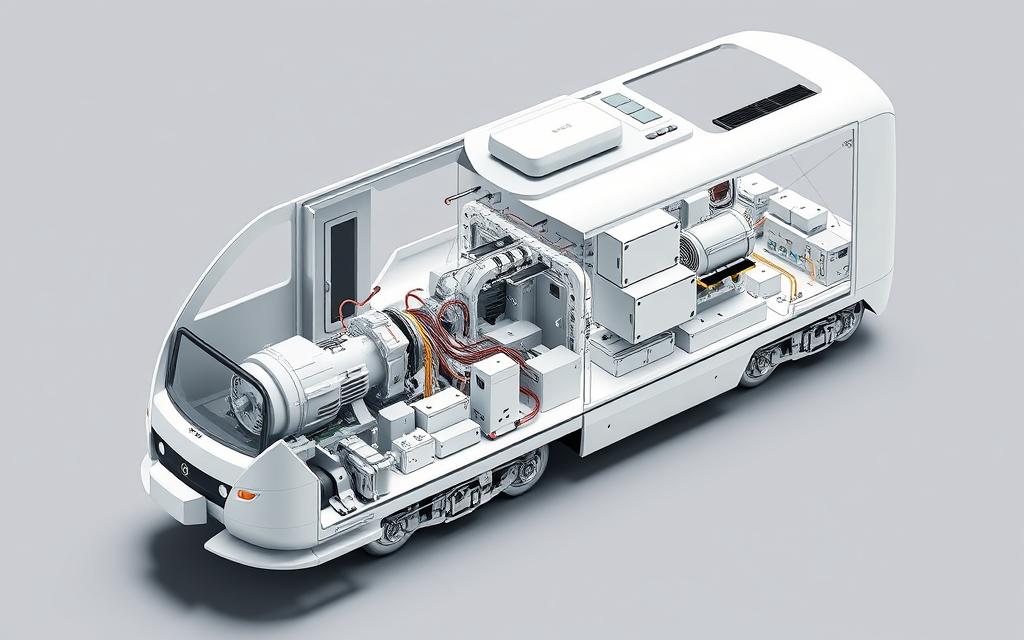
Modern regenerative braking systems are true engineering marvels. They turn kinetic energy into electricity. The system has many parts working together to capture, convert, and store energy during braking.
Traction Motors Functioning as Generators
At the core of regenerative braking is a simple yet powerful idea. Electric traction motors act as generators when reversed during braking. This lets them turn the train’s mechanical energy back into electricity.
When the driver brakes, the control system changes the motor’s mode. Instead of using power, it generates electricity through electromagnetic induction.
Power Electronics and Conversion Systems
The electricity from braking needs to be refined before it can be used again. Power electronics act as a smart link between generation and use. They manage voltage, frequency, and power quality.
ABB’s Power Conversion Technology
ABB has created advanced power conversion systems for railways. Their tech changes the variable AC from braking motors into stable DC or AC for the grid. These systems use smart algorithms to improve energy recovery based on current conditions.
Siemens Sitras SCS Energy Management
Siemens’ Sitras SCS is a top power conversion technology. It manages power between braking trains and the grid. It ensures smooth power transfer and keeps voltage stable.
Energy Storage Mediums and Technologies
When energy can’t be used right away, various storage solutions capture it. Different mediums offer benefits based on specific needs.
Lithium-ion Battery Arrays
Lithium-ion batteries are popular for storing energy in railways. They have high energy density and are getting cheaper. These batteries can store a lot of energy for hours, perfect for acceleration or powering facilities.
Supercapacitor Energy Storage
Supercapacitors are great for quick charge and discharge cycles. They’re perfect for urban rail systems with frequent stops. Though they store less energy than batteries, they provide power fast.
Flywheel Kinetic Storage Systems
Flywheel systems store energy as rotational kinetic energy. They offer high power density and last a long time. Modern flywheels use magnetic bearings and vacuum chambers to reduce friction and keep efficiency high.
Each storage technology has its own role in the system. The choice depends on the operation, power needs, and cost.
Real-World Applications and Operational Case Studies
Regenerative braking is used in many places, from city trains to fast networks. It shows how different railways use energy recovery systems in different ways. These examples show the results of these efforts.
London Underground’s Sub-Surface Network
The London Underground’s S7 and S8 trains are great at saving energy. They give back about 20% of the energy they use to the power supply. This is thanks to their advanced braking systems.
To make this work, they needed special power management systems. These systems send the saved energy to other trains, not just store it.
Japan’s Shinkansen Bullet Train Implementation
In Japan, the Shinkansen trains use regenerative braking. They capture a lot of energy when they slow down from 320 km/h.
Special electronics turn this energy into something the grid can use. This helps power other trains and cuts down on the need for extra power.
German Rail’s ICE Network Energy Recovery
Deutsche Bahn’s ICE trains use regenerative braking in Germany. They work with the country’s green energy plans, sending power back to the grid.
This helps Germany’s green goals and saves money. It shows how regenerative braking can help the environment.
California’s Caltrain Modernisation Programme
Caltrain in California is making its trains more efficient. They’re adding regenerative braking to their new trains. This will work with the overhead wires to save even more energy.
Like Delhi Metro, Caltrain hopes to save a lot of power. This shows how North America is adopting energy-saving ideas from Europe and Asia.
These examples show how regenerative braking works in different places. Each one shows how to use energy recovery in unique ways.
Energy Storage Technologies Specific for Railways
Railway operators need special energy storage solutions. These must handle extreme vibrations, temperature changes, and quick charge-discharge cycles. New technologies are being developed to meet these needs.
Sodium-Nickel Chloride Battery Systems
Sodium-nickel chloride batteries, also known as ZEBRA batteries, are great for railways. They work well in high temperatures, around 270-350°C. They also have high energy density and stay stable in heat.
These batteries are resistant to vibration and shock. This makes them perfect for use in trains. They are also sealed, which helps prevent leaks and keeps them safe in accidents.
Lithium Titanate Oxide Battery Technology
Lithium titanate oxide (LTO) batteries are another good option for railways. They use titanium nanostructures in the anode, unlike regular lithium-ion batteries.
This design allows for very fast charging and lasts over 20,000 cycles. They are also safer, with less risk of overheating.
Advanced Supercapacitor Applications
Supercapacitors are key for capturing energy quickly in railways. They are great at storing energy fast during short stops.

Capacitors can store energy fast and at high voltages. This is better than batteries for quick power needs, like during braking.
Maxwell Technologies K2 Series
Maxwell’s K2 Series supercapacitors are made for transport. They have advanced electrode technology for high power and reliable performance. They work well from -40°C to 65°C.
Skeleton Technologies SkelCap Modules
Skeleton Technologies’ SkelCap modules use curved graphene for high power density. Their design offers great frequency response and low internal resistance. This makes them efficient for capturing energy during braking.
Operational Benefits and Performance Metrics
Railway operators around the world see big benefits from regenerative braking systems. These systems do more than just save energy. They make rail networks more efficient and sustainable.
Energy Efficiency Improvements of 15-30%
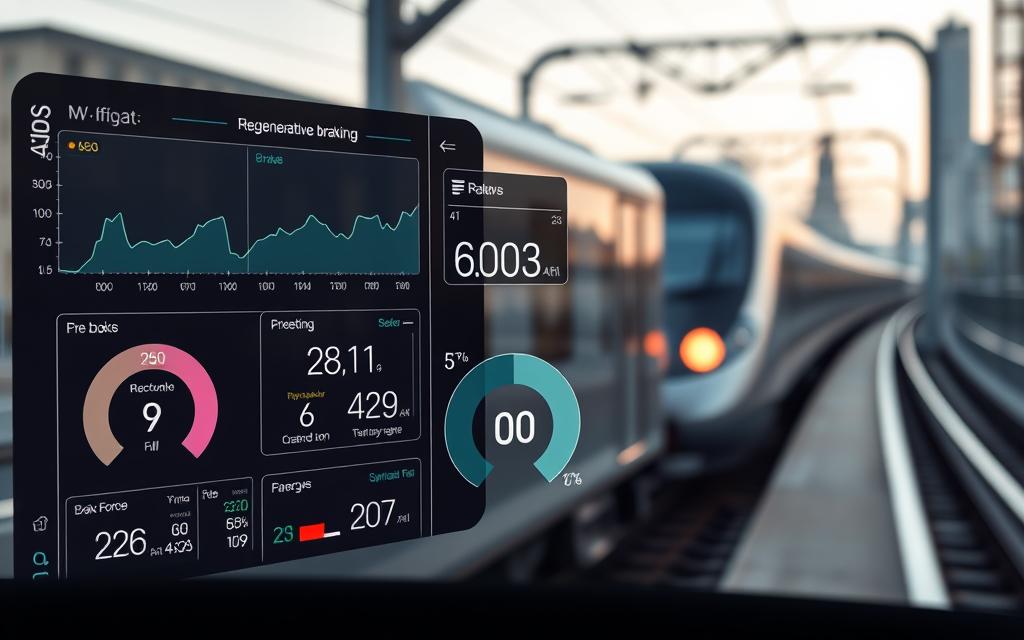
Modern regenerative braking systems save 15-30% of energy. This depends on how often trains stop and the network’s layout. Trains that stop a lot can save up to 30% of energy.
Studies in railway technology journals show suburban trains can save about 30% of energy. This is a big step towards making rail systems more efficient.
Reduced Carbon Emissions and Environmental Impact
Regenerative braking also helps the environment. It turns energy that would be lost as heat into useful power. This cuts down on the carbon footprint of trains.
Trains that stop a lot can reduce CO2 emissions by 8-17%. Dense suburban networks can cut emissions by up to 30%. This makes regenerative braking key for green rail operations.
Lower Maintenance Costs and Extended Component Life
Regenerative systems also reduce wear on brakes. This means brakes last longer and need less repair. This saves money on maintenance.
These savings are a big part of why regenerative braking is good for railways. Operators see:
- Brake pads last 30-40% longer
- Brake discs need less replacement
- Less time and money for brake repairs
Together, saving energy, cutting emissions, and reducing maintenance costs make a strong case for regenerative braking. These benefits explain why it’s now common in modern rail systems.
Technical Challenges and Implementation Barriers
Regenerative braking technology is a big step forward, but it comes with big hurdles for railway operators. Switching from old braking methods to new ones is tough. It affects how well and reliably trains work.
Grid Compatibility and Power Quality Issues
One big challenge is getting the energy back into the grid. Rail systems, often running on DC, have low voltages. This makes it hard to send energy back to the public grid.
When trains brake, they can cause power issues. These problems can mess with other trains and need special systems to fix.
Energy Storage Capacity Limitations
Trains make the most energy when they slow down. But storing this energy is a big problem. They need to store it well for later use or to send it back to the grid.
Today’s batteries can’t store enough energy or charge and discharge fast enough. Here’s a look at some storage tech limits:
| Storage Technology | Energy Density (Wh/kg) | Power Density (W/kg) | Cycle Life |
|---|---|---|---|
| Lithium Titanate Oxide | 70-80 | 3000-4000 | 15,000+ |
| Sodium-Nickel Chloride | 100-120 | 150-200 | 2500-3000 |
| Advanced Supercapacitors | 5-10 | 5000-10000 | 500,000+ |
System Integration and Control Complexities
Integrating regenerative braking with old train systems is a big challenge. It needs precise timing and communication. This is hard for railway engineers.
Many systems must work together. This includes traction, energy management, and safety. It needs smart software and strong hardware.
Voltage Regulation Challenges
Keeping voltage stable when regenerating energy is hard. Too much energy can cause overvoltage. Too little can lead to voltage drops.
Power electronics must manage these changes. This prevents damage and keeps performance steady.
Thermal Management Requirements
High-power systems get very hot. They need good cooling systems to handle the heat. This is even more important in underground systems where it’s already warm.
Not managing heat well can shorten component life. It can also make the system less reliable.
These technical barriers need careful engineering solutions. Only then can regenerative braking reach its full promise in rail networks worldwide.
Economic Analysis and Financial Considerations
Adding regenerative braking to railways needs smart financial planning. Operators must look at both the initial costs and the long-term savings. This helps figure out if the tech is worth it.
Initial Capital Investment Requirements
The cost to start using regenerative braking changes based on the train and its setup. New electric trains need less work than older ones.
For example, Delhi Metro updated 280 coaches for about 114 million Indian Rupees. That’s around $9,200 per coach today.
The investment requirements include new parts like power electronics and control systems. Adding energy storage might also be needed. The first cost is the biggest hurdle for many.
Return on Investment Timelines
Systems usually pay back in 3-7 years thanks to energy savings and less maintenance. How fast depends on how often the trains run and local electricity prices.
Busy metro systems get their money back faster than slower trains. Places with high electricity costs also see quicker returns.
Operational Cost Savings Analysis
Regenerative braking cuts down on operational costs in many ways. It uses less energy, which lowers bills.
It also means less wear on brakes, so they last longer. Some see brake replacements up to 50% less often.
These savings make a strong financial considerations argument. The tech gets even more valuable as energy prices go up.
Government Funding and Incentive Programmes
Many governments help by supporting regenerative braking. These efforts help cover the initial costs and speed up adoption.
In the U.S., the Federal Transit Administration gives grants for energy-saving projects. States also offer extra help for cutting carbon emissions.
Europe’s Horizon Europe and similar programs in Asia and elsewhere back sustainable transport. This detailed economic analysis shows that, despite high start-up costs, regenerative braking is a wise choice for modern railways.
Future Developments and Emerging Technologies
The railway industry is on the brink of a big change. New innovations will change how trains use energy. These changes will make trains more efficient and smarter.
Solid-State Battery Advancements
Next-generation energy storage is exciting for railways. Solid-state batteries are better than current ones. They have more energy and are safer.
These batteries don’t have flammable liquids, making them safer. They are also smaller, fitting better in trains. This means they can store more energy from braking.
Artificial Intelligence in Energy Management
Artificial intelligence is changing how rail systems use energy. AI can predict when trains will brake and adjust power use. This makes energy use more efficient.
AI helps use the energy from braking where it’s most needed. This reduces waste and makes trains more efficient.
Hitachi’s AI-powered Energy Management
Hitachi has made AI systems that work with real-time data from trains. Their technology improves energy flow between trains. This makes trains use less power.
Hitachi’s system also cuts down on emissions. It’s key for railways to meet their green goals.
Siemens Predictive Energy Optimisation
Siemens uses algorithms to predict energy needs. They look at timetables, passenger numbers, and track types. This helps save energy during busy times.
Siemens’ approach is a big step towards making energy use in rail systems better.
Smart Grid Integration Technologies
Future railways will be part of a bigger energy system. Smart grid tech lets trains send and receive energy. This turns trains into mobile power sources.
Excess energy can help local areas during peak times. Railways could become energy sources, improving the grid and making money.
| Technology | Key Advantage | Implementation Timeline | Potential Impact |
|---|---|---|---|
| Solid-State Batteries | Higher energy density | 2025-2027 | 30% more storage capacity |
| AI Energy Management | Predictive optimisation | 2024-2026 | 20% efficiency improvement |
| Smart Grid Integration | Bidirectional energy flow | 2026-2028 | Grid stability enhancement |
These new technologies will change how railways manage energy. Advanced storage, smart control, and grid tech will make rail travel better and more sustainable for years to come.
Conclusion
Regenerative braking systems have changed trains into mobile energy storage units. This technology is now used in places like the London Underground and Japan’s Shinkansen. It shows that railways can capture and reuse energy, cutting waste and making things more sustainable.
Projects like HS1 show how regenerative braking helps the environment. It cuts costs and reduces carbon emissions. These systems make energy use 15-30% better, helping both the economy and the planet.
Future railway technology will get even better with new batteries and AI. More innovation means better efficiency and smarter use of energy. Regenerative braking is key to making railways greener and cheaper for everyone.
FAQ
What is regenerative braking in trains?
Regenerative braking lets trains save energy when they slow down. Instead of losing energy as heat, electric motors turn it into electricity. This electricity can be used again or stored, making trains more efficient and green.
How does regenerative braking differ from conventional braking systems?
Old braking systems lose energy as heat. But regenerative braking turns energy into electricity that can be used again. This makes trains more efficient, saves money, and reduces wear on parts.
Is regenerative braking technology currently in use on railways?
Yes, it’s used in many places around the world. For example, in the London Underground, Japan’s Shinkansen, and California’s Caltrain. It’s also in trains like the Siemens Desiro ML and Alstom Coradia iLint.
What are the main benefits of regenerative braking for railways?
It saves 15–30% of energy, cuts carbon emissions, and lowers maintenance costs. This makes trains more sustainable and saves money.
What types of energy storage are used in regenerative braking systems?
Trains use lithium-ion batteries, supercapacitors, and other types. Each type is chosen based on the train’s needs.
What challenges are associated with implementing regenerative braking?
Challenges include fitting into the grid, storing enough energy, and managing heat. Advanced systems help solve these problems.
How cost-effective is regenerative braking technology?
It costs a lot at first but saves money over time. It cuts energy use and maintenance costs. Governments often help with funding.
What role does artificial intelligence play in regenerative braking?
AI helps manage energy better. It optimises how energy is saved, stored, and used. This makes trains more efficient and smart.
Are there future advancements expected in regenerative braking?
Yes, new tech like solid-state batteries and smarter AI is coming. These will make trains even more efficient and green.
How does regenerative braking contribute to environmental sustainability?
It saves energy that would be wasted, cutting carbon emissions. This makes trains more eco-friendly and supports green transport goals.
